Showing posts with label friends. Show all posts

Wednesday, August 31, 2011

Race and Relations in Londonstani

Spoiler Alert!: The biggest surprises of the novel are revealed in this post.
by Courtney Hilden

Londonstani by Gautam Malkani is the story of a young Sikh man named Jas, who, with his gang of Sikh and Hindi guy friends, is running a cell phone scam. After partnering with an older Indian man, Jas is mentored about dating and begins seeing a Muslim girl. The novel presents multiple ideas about race via the many characters, and when near the end of the novel it is revealed that although Jas is actually white and Sikh, the previous assumptions of the readers are upended. The sudden change is stunning, and although frustratingly late in the novel, it forces readers to reassess the ideas about race, gender, religious beliefs and other forms of identity the novel previously presented.
First, there is the issue of Jas's identity and the way it is presented to the reader at various times in the novel. Near the beginning of the novel, Jas self-identifies as Sikh. Later on, when talking about the character named Jaswinder, Jas says he was mad because "I'd got the nickname Jas." When Jas offers to share his nickname, Jaswinder tells him not to be stupid because "It's bad enough havin so many desis at school with the same fuckin nickname." The implication leads us to believe that Jas's full name is Jaswinder, though at the end of the novel it is revealed to be Jason. Jas's father is called a good Indian businessman. Jas has Indian friends and talks about what white people are like in way that indicates he does not see himself as one of them. Though Jas is obviously an unreliable narrator, the reader imagines almost the entire story with Jas being Sikh. Obviously, this comes into question when Jas's medical papers describe him as white and use a stereotypical old-school, elite British name. And although Jas calls himself Sikh, his identity is never completely clear, as his parents obviously do not see him as South Asian, saying that he is not one of them. Mr. Ashwood says that he was once a better person, implying that once he was not one of them. The following interpretation assumes that Jas is a white Sikh convert but one who is passing as South Asian amongst the South Asian community.
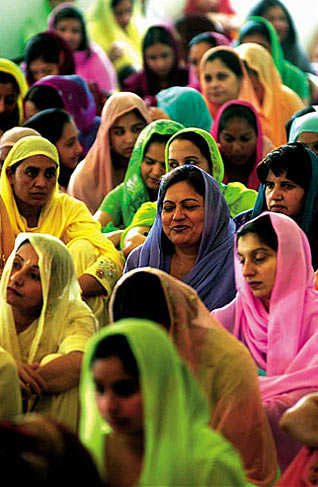
Identity is the major focus of the novel. The three sections of the novel are titled different and not necessarily politically correct names for South Asians. Much of the dialogue of the novel is peppered with identity terms, including the most often used one: coconut. A coconut, as the novel defines it, is someone who is brown on the outside and white on the inside, or put more accurately, a South Asian who acts white. Jas goes so far as to say that Arun is semi-coconut, which is to say someone who does not act white but is not truly South Asian either. Coconut gets thrown around frequently in the novel, which is interesting, since Jas himself is the opposite of a coconut: he is a white man who acts South Asian.
The novel presents an unflattering view of South Asian men, especially young South Asian men. The characters have various ugly faults, ones that reinforce ideas about how apparently dangerous and evil young South Asian men are. Ravi and Amit are homophobes, making jokes about Jas's sexuality, mocking men coded as gay at the gym and talking about how much they would like to see a skin magazine featuring Indian lesbians. The gang talks about women as objects, Ravi commenting about he will "get off wid as many fit gyals" as he wants and Sanjay explaining how his teeth are a "thong-removal system." Hardjit is aggressive and often violent. The gang defines their strength by their sexual prowess, Sanjay chastising Jas about his lack of sexual experience by saying he is "so pathetic you'd probably go limp if she let you do any more." The novel depicts the dominant view of South Asian men: they are violent and hateful and dangerous. The novel never subverts this racist perspective of them. The only male characters who make some effort at respecting women are Jas, who is actually white, and Arun, who is defined as being un-South Asian. Although Jas does not completely respect women, the two whitest characters are presented as the protectors of womanhood, a racist and patriarchal idea.
If this was not enough, Londonstani goes farther in its racist view of South Asian men: that they corrupt good white men like Jas. Mr. Ashwood comments several times that Jas was never like this before. And Jas himself often remarks about the time in his life before he was friends with these group. Near the end of the novel, Jas attempts to steal from his own father. His parents say that his friend are a bad influence on him, again, presenting the dominant view about the Other: that they are a menace to society and will hurt even supposedly good white boys, like Jas apparently was before he fell into this group.
Even the character who outwardly represents a model, both in the sense of being a model minority to white characters and a model to the Indian characters, turns out to be dangerous and violent. Sanjay is a slightly older, former student of Mr. Ashwood. Mr. Ashwood sets up Jas and the rest of the boys with Sanjay in an attempt to provide them with a positive role model, because he has a good education and a good job. He who is clearly meant to be a stereotypical model minority, with his fancy apartment, fast car, and cultural capital, but is really a gangster pulling a multi-country scam. He too turns out to be a corrupting force in Jas's life, manipulating him into stealing from his own father. There is no good male South Asian man in this entire novel. All of them are bad.
Economic forces also come into play in the novel. Ashwood discusses, among other things, his beliefs in socialism. But Sanjay the model minority is himself a capitalist, one who believes in "bling-bling urban youth culture." He cuts business deals, including one with Jas and his friends. Many of the characters use materialism through the luxury items they have, as a way of expressing power. Sanjay himself sees traditional work as a problem, using the problematic term "whore" to describe his work. Capitalism is criticized in the book as being the root of many of the problems in the South Asian community since it is a way for South Asians to assimilate into the larger, dominant culture, and Malkani sketches how problematic this connection is, but never goes farther than this.
Gender is also problematic displayed. Samira is the only major young woman in the novel. As a Muslim woman, she is expected to date and eventually marry a Muslim man, even though she spends a significant portion of the novel dating Jas. Samira's father is apparently okay with this, but her brothers are not. Samira is presented at the beginning of the novel as being beautiful, but Jas is surprised to learn she is a virgin, and although he respects her, the things that both his friend and later he himself say about her indicate their desire to control her. As a white man, he has the obvious power advantages over her, but as stated before, he is the only one who can apparently respect women, since his friends spend time discussing the sexual ways they would like to interact with her. Samira dates a white man and no one sees this as problematic, especially given that South Asian men are coded as less desirable within the novel. Meanwhile, the mothers of these young men are depicted as absolute harpies. They are shrill, ridiculous, petty, hysterical, manipulative and insensitive to everyone around them. They are constantly nagging their sons, to the point where one son actually kills himself. One mother constantly tries to control her future daughter-in-law's clothes and behavior. They emasculate their sons and husbands. They are miserable, and this too is never challenged. South Asians mothers are possibly the least likable characters in the novel, and this idea manages to be racist, misogynistic and ageist all at once.
Ultimately, the problem with Londonstani is that is presents a host of racist ideas about South Asians, which, considering the author's background, makes it an even more complicated issue about internalized hatred. While the novel does critically look at capitalism and its role in South Asian assimilation, the novel also presents stereotypes of South Asian men and women while depicting the one white character as being semi-heroic and understanding. The novel asks readers to have empathy for the white narrator, who has been wrongly influenced by South Asian thugs but is good-hearted enough to protect a South Asian woman who apparently cannot rely on men of her own race.

Thursday, July 14, 2011

Heavier Than Heaven: A Biography of Kurt Cobain

by Courtney Hilden
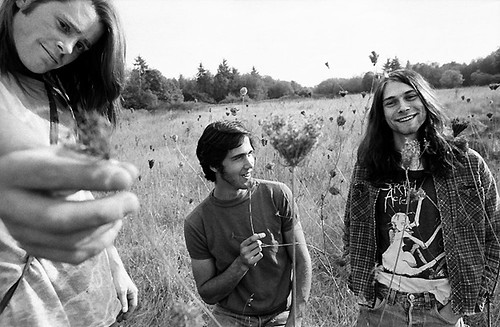
Heavier than Heaven: A Biography of Kurt Cobain by Charles R. Cross, covers the life and infamous times of the well-loved musician. The book charts the struggles within his family, his adolescent stints as both homeless and creative, his lovers (some of whom are famous in their own right), and, of course, the explosive band he served as frontman for, Nirvana.
The most difficult things about biographies is the tone. The feelings of the biographer inevitably come out, and usually this is either admiration or hatred, with little in-between. Cross manages to avoid writing a hagiography, but it is still a mostly admirable view of Cobain, and, depending on your view of Cobain, may or may not have been deserved.
Cross gives all sorts of interesting, and often surprising, details about Cobain. Cobain, famous for jumping into drum sets, destroying sets, and yes, smashing guitars, drove like "a little old lady" in the words of his bandmates, to the point where they often did not want him to drive.
Despite being fairly long, there were multiple parts of the book that begged for more details. As a teenager, Cobain became a born-again Christian while living with and befriending other born-again Christians. Given that Cobain seemed, at the least, agnostic later on in life, and famously covered Christian songs, this section of his story deserves more research, especially given that a clear reason for his falling out with Christianity never is explained.
The book focuses mostly on Cobain, but his relationships with his bandmates is only glanced at. The book does spend time discussing Chad Channing's split from the band, and how it was handled relatively maturely by Cobain and his fellow bandmate and best friend, Krist Novoselic. Minimal time is spent on Cobain's relationship with Novoselic and less on Dave Grohl, who, among other things, was Cobain's roommate.
The book also comes with a collection of black and white photos of Cobain. One of the things missing is photos of his art, which was Cobain's other great creative expression. As a fan (yes, yes, I will admit that I am really a fan of Nirvana), this could easily be a whole other book, probably in coffeebook style.
The most fascinating thing about Cobain was actually the women around him. Cobain struggled with his relationship with his mother, who Cobain seems to have seen as what we would now call a cougar, but was also put in impossibly difficult situations, with at least one unwanted pregnancy and an abusive husband. (Not Cobain's father but stepfather.) Cobain's younger sister is a lesbian, and this was almost entirely brushed over. Cobain's girlfriends, Tracy Marander, Tobi Vail, Mary Lou Lord, Courtney Love, were all interesting in their own right. The later three were all musicians themselves; Vail was a member of the seminal Bikini Kill and Love famously fronted Hole; Lord was a folk singer. Marander in particular sacrificed for Cobain, economically supporting him when Cobain was out of work. It is too bad that there are not books (or in some cases, more) about these women, who unfortunately, have become footnotes in Cobain's life and not the full people they obviously are, though this is through no fault of Cross.
For a fan, Heavier than Heaven is a must read. The less interested in Nirvana, though, the less interested most readers would be in this book.

Wednesday, March 16, 2011

Motor City Blues

Spoiler Alert!: The most important spoiler for the season so far is in this review.
by Courtney Hilden

Oh, hi, Detroit 187, it's been a long time since we've checked in with you.
The first thing this episode covered, and probably the biggest change on the show, is the death of Detective Stone. He sort of died off screen, as the audience watched him get shot and then they ended the episode there. And when we returned, there were the detectives, mourning his loss. Given that Stone was one of the few white and young actors on the show, it's surprising that they killed him off. This is actually sort of admirable, because usually when they kill off characters they are the person of color who has always been relegated to a side character anyway. Here's hoping the show will allow the other characters, almost all who are people of color, will be the focus of the show. They are far more interesting.
That said, the characters got over Stone's death pretty quickly. By about fifteen minutes into the episode, it was easy to conclude that no one on the team had died, judging by how business as usual the characters were. Sanchez, as a woman (and the only woman really on this team, as one of the others is a boss and the other is federal) was the only one allowed to mourn, which adheres to our culture's insistance that only women can (should, are weaker for) showing emotion and that men never feel anything, especially not for a colleague or friend. The scene between Sanchez and Fitch, talking about Stone, rang incredibly false. The actress playing Sanchez seemed to struggle to be sad.
Speaking of feminism, it would have been easy for this show to turn Fitch's wife, Linda, into a sterotype, but instead, they showed her as someone who wanted her son to know his father and wanted to avoid a confrontation with him. This is possibly the most heartaching and realistic-kid-centric divorced couple I've seen on television.
That said, taken in the context of Sanchez, Latina as female stereotype and Linda, white woman as not a female stereotype, I was bothered. Linda, a white character, is allowed to be more than her identity as a white woman, while Sanchez is confined to the stereotypes of Latinas as histronic. Or, put another way, Sanchez, as a woman of color has been defined solely as a woman of color, and nothing beyond that.
(As of this episode, Sanchez is also the character with the least to do or the least backstory. The show has spent time showing the audience Fitch's family problems, Washington's relative family bliss, Longford's struggle with whether or not to retire, and Mahajan, with his romantic life. When are they going to give Sanchez something to do other than be a love interest of Stone and Fitch? When is she going to be defined as more than a woman for male characters to desire?)
That said, this show as a whole has done been doing some wonderful things with their soundtrack and set. The soundtrack has been a wonderful blend of old school and new school, with an emphasis on music that has come out of Detroit. The graffiti in this episode was also great. "At least Katrina was quick." That's a wonderful bit of on-the-nose politics. Nice. And the best moment? Bobby freaking out Washington by calling him on the phone.

Friday, February 18, 2011

Chuck Versus the C.A.T. Squad


by Courtney Hilden

Last episode, Chuck realized that Sarah did not have the kind of family and friends to come to their wedding, so he begins to search for her colleagues from the CIA. Chuck comes across a group of girls called the C.A.T. Squad, and you know that means an episode filled with bad jokes.
Obviously the C.A.T. Squad was meant to be remind viewers of Charlie's Angels, but like so many of the sexist concepts on the show, this fell flat. Sarah's already a hottie, we get it, it's hardly as if anyone needed reminding. The only good thing was that the writers were competent enough to give each of the girls motivation, even if it was pretty two dimensional and predictable. (The Party Girl was clearly the cutest and most likeable, like a Reese Witherspoon-esque character, which of course also meant she had to be the villian.
What was the point of this episode? Of this entire storyline? What the show should be doing is exploring Sarah's past, especially since she is the second most important (and one of the more interesting and engaging) characters. Sarah deserves to have as many episodes exploring her past as Chuck as had for his. This episode just felt like a waste of our time and excuse for a bunch of sexy women to bounce around. The strengths of this show are their storylines and character development, and that is what the writers should be focusing on.

Tuesday, June 22, 2010

The Secret of Chimneys

by Courtney Hilden
Spoiler Alert!: The mysteries are revealed in this review.

"The Secret of Chimneys" finds our heroine, Miss Marple, visiting an old friend and niece, Virginia, at the family's lavish country estate. A count from Austria comes to visit them to secure a business deal, and in the process, is killed. Marple, as usual, is on the case, this time aided by an Inspector Finch, who doesn't bumble around but holds his own and respects her abilities.
It's this Inspector Finch who is the most enjoyable part of the episode. It seems clear that the show is setting up a possible love interest for Miss Marple, who always plays such a quiet role in this series. Possibly Finch is not just a love interest but someone who is spying on her. It would be interesting to see if Finch returns, in what capacity, and what motivations of his will be uncovered.
There were also some lovely touches. The Count was hilariously overdressed in a Dracula-like black cloak and red-ribboned medal. Several of the characters attempting to decode the musical message with a piano was delightful. Having Marple find the diamond and then pull it out of her purse, revealing the rest of the mystery's clues, made for a shocking conclusion, because Marple herself so rarely becomes directly involved (or puts away a brother-in-law.)
Although not as good as previously episodes, it's still a solid entry in the series.