Showing posts with label men. Show all posts

Wednesday, August 31, 2011

Race and Relations in Londonstani

Spoiler Alert!: The biggest surprises of the novel are revealed in this post.
by Courtney Hilden

Londonstani by Gautam Malkani is the story of a young Sikh man named Jas, who, with his gang of Sikh and Hindi guy friends, is running a cell phone scam. After partnering with an older Indian man, Jas is mentored about dating and begins seeing a Muslim girl. The novel presents multiple ideas about race via the many characters, and when near the end of the novel it is revealed that although Jas is actually white and Sikh, the previous assumptions of the readers are upended. The sudden change is stunning, and although frustratingly late in the novel, it forces readers to reassess the ideas about race, gender, religious beliefs and other forms of identity the novel previously presented.
First, there is the issue of Jas's identity and the way it is presented to the reader at various times in the novel. Near the beginning of the novel, Jas self-identifies as Sikh. Later on, when talking about the character named Jaswinder, Jas says he was mad because "I'd got the nickname Jas." When Jas offers to share his nickname, Jaswinder tells him not to be stupid because "It's bad enough havin so many desis at school with the same fuckin nickname." The implication leads us to believe that Jas's full name is Jaswinder, though at the end of the novel it is revealed to be Jason. Jas's father is called a good Indian businessman. Jas has Indian friends and talks about what white people are like in way that indicates he does not see himself as one of them. Though Jas is obviously an unreliable narrator, the reader imagines almost the entire story with Jas being Sikh. Obviously, this comes into question when Jas's medical papers describe him as white and use a stereotypical old-school, elite British name. And although Jas calls himself Sikh, his identity is never completely clear, as his parents obviously do not see him as South Asian, saying that he is not one of them. Mr. Ashwood says that he was once a better person, implying that once he was not one of them. The following interpretation assumes that Jas is a white Sikh convert but one who is passing as South Asian amongst the South Asian community.
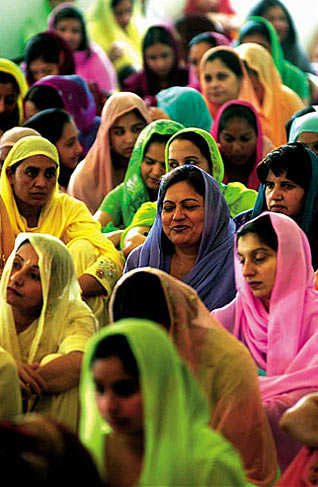
Identity is the major focus of the novel. The three sections of the novel are titled different and not necessarily politically correct names for South Asians. Much of the dialogue of the novel is peppered with identity terms, including the most often used one: coconut. A coconut, as the novel defines it, is someone who is brown on the outside and white on the inside, or put more accurately, a South Asian who acts white. Jas goes so far as to say that Arun is semi-coconut, which is to say someone who does not act white but is not truly South Asian either. Coconut gets thrown around frequently in the novel, which is interesting, since Jas himself is the opposite of a coconut: he is a white man who acts South Asian.
The novel presents an unflattering view of South Asian men, especially young South Asian men. The characters have various ugly faults, ones that reinforce ideas about how apparently dangerous and evil young South Asian men are. Ravi and Amit are homophobes, making jokes about Jas's sexuality, mocking men coded as gay at the gym and talking about how much they would like to see a skin magazine featuring Indian lesbians. The gang talks about women as objects, Ravi commenting about he will "get off wid as many fit gyals" as he wants and Sanjay explaining how his teeth are a "thong-removal system." Hardjit is aggressive and often violent. The gang defines their strength by their sexual prowess, Sanjay chastising Jas about his lack of sexual experience by saying he is "so pathetic you'd probably go limp if she let you do any more." The novel depicts the dominant view of South Asian men: they are violent and hateful and dangerous. The novel never subverts this racist perspective of them. The only male characters who make some effort at respecting women are Jas, who is actually white, and Arun, who is defined as being un-South Asian. Although Jas does not completely respect women, the two whitest characters are presented as the protectors of womanhood, a racist and patriarchal idea.
If this was not enough, Londonstani goes farther in its racist view of South Asian men: that they corrupt good white men like Jas. Mr. Ashwood comments several times that Jas was never like this before. And Jas himself often remarks about the time in his life before he was friends with these group. Near the end of the novel, Jas attempts to steal from his own father. His parents say that his friend are a bad influence on him, again, presenting the dominant view about the Other: that they are a menace to society and will hurt even supposedly good white boys, like Jas apparently was before he fell into this group.
Even the character who outwardly represents a model, both in the sense of being a model minority to white characters and a model to the Indian characters, turns out to be dangerous and violent. Sanjay is a slightly older, former student of Mr. Ashwood. Mr. Ashwood sets up Jas and the rest of the boys with Sanjay in an attempt to provide them with a positive role model, because he has a good education and a good job. He who is clearly meant to be a stereotypical model minority, with his fancy apartment, fast car, and cultural capital, but is really a gangster pulling a multi-country scam. He too turns out to be a corrupting force in Jas's life, manipulating him into stealing from his own father. There is no good male South Asian man in this entire novel. All of them are bad.
Economic forces also come into play in the novel. Ashwood discusses, among other things, his beliefs in socialism. But Sanjay the model minority is himself a capitalist, one who believes in "bling-bling urban youth culture." He cuts business deals, including one with Jas and his friends. Many of the characters use materialism through the luxury items they have, as a way of expressing power. Sanjay himself sees traditional work as a problem, using the problematic term "whore" to describe his work. Capitalism is criticized in the book as being the root of many of the problems in the South Asian community since it is a way for South Asians to assimilate into the larger, dominant culture, and Malkani sketches how problematic this connection is, but never goes farther than this.
Gender is also problematic displayed. Samira is the only major young woman in the novel. As a Muslim woman, she is expected to date and eventually marry a Muslim man, even though she spends a significant portion of the novel dating Jas. Samira's father is apparently okay with this, but her brothers are not. Samira is presented at the beginning of the novel as being beautiful, but Jas is surprised to learn she is a virgin, and although he respects her, the things that both his friend and later he himself say about her indicate their desire to control her. As a white man, he has the obvious power advantages over her, but as stated before, he is the only one who can apparently respect women, since his friends spend time discussing the sexual ways they would like to interact with her. Samira dates a white man and no one sees this as problematic, especially given that South Asian men are coded as less desirable within the novel. Meanwhile, the mothers of these young men are depicted as absolute harpies. They are shrill, ridiculous, petty, hysterical, manipulative and insensitive to everyone around them. They are constantly nagging their sons, to the point where one son actually kills himself. One mother constantly tries to control her future daughter-in-law's clothes and behavior. They emasculate their sons and husbands. They are miserable, and this too is never challenged. South Asians mothers are possibly the least likable characters in the novel, and this idea manages to be racist, misogynistic and ageist all at once.
Ultimately, the problem with Londonstani is that is presents a host of racist ideas about South Asians, which, considering the author's background, makes it an even more complicated issue about internalized hatred. While the novel does critically look at capitalism and its role in South Asian assimilation, the novel also presents stereotypes of South Asian men and women while depicting the one white character as being semi-heroic and understanding. The novel asks readers to have empathy for the white narrator, who has been wrongly influenced by South Asian thugs but is good-hearted enough to protect a South Asian woman who apparently cannot rely on men of her own race.

Wednesday, June 29, 2011

Creepy Creatures

by Courtney Hilden
Spoiler Alert!: Some of the endings of the stories are revealed in this review.

Earlier, we here at Recommended reviewed Terror Trips, a collection of horror stories from Goosebumps told in a graphic narrative style. Creepy Creatures is the same basic format: three horror stories from R.L. Stine. Because this is Goosebumps, the stories are meant to still be appropriate for younger readers. "The Werewolf of Fever Swamp" is about a family that moves into a new neighborhood and finds there may be werewolves living in the forest. "The Scarecrow Walks at Midnight" is about two siblings whose trip to their grandparents farm is ruined by animated scarecrows. And "The Abominable Snowman of Pasadena" is about a scientist father and his children bringing home Bigfoot.
The artwork is all three stories is distracting. Both "The Werewolf of Fever Swamp" and "The Scarecrow Walks at Midnight" have art that is relatively realistic, particularly the latter. The art for "The Abominable Snowman of Pasadena" is much more cartoony, but the eyes are really distracting, with uncolored pupils.
The two superior sections, in terms of storytelling, are "The Werewolf of Fever Swamp" and "The Scarecrow Walks at Midnight." In the werewolf story, in the end, the young man and narrator turns into a werewolf, which, considering these stories are meant to be for children (just about no one ever dies), is surprising. "The Scarecrow Walks at Midnight" is actually interesting because it depicts one of the grandparents' employers, Stanley, who is depicted as having some kind of special need.
It is this character who is the most problematic. Stanley is the bad guy in the story, who has created zombie-like scarecrows based on things he read in a magic book. People with disabilities are often depicted as stupid, pathetic, evil or combinations thereof. In this story, Stanley is depicted as all of them. He is evil enough to use his scarecrows to threaten the grandparents and the siblings, but too stupid and pathetic to effectively control or destroy the scarecrows. No real motivation is given for his actions; apparently his "inabilities" do that for him. No critique of the family that employs him or society that marginalizes someone like him is given (which would have served for a more reasonable and sympathetic motivation.) Instead, he is just bad. Instead, he is just like his zombie-scarecrows; dangerous and needing to be controlled by the employers (easily read here as capitalists) and the abled.
Creepy Creatures is not as good as Terror Trips, both in terms of art and storylines. Creepy Creatures also has some problematic depictions of those with special needs, which discerning parents might want to shield their children from or at least discuss with them.

Thursday, June 16, 2011

Mary Olivier: A Life

Spoiler Alert!: Some details of the novel, like the death of a certain character, is revealed in this review.
by Courtney Hilden

Mary Olivier: A Life by May Sinclair, is exactly that: the life story (though, interestingly, not necessarily her death) of the title character, who comes of age in Victorian England, struggling with an unsympathetic family, uncaring men, and a passion for intellectual pursuits.
The writing is marvelous. Like The Awakening, the novel begins as the main character is just swimming out of consciousness, and the reader moves through the first part of the book as if in coming out of a dream, becoming more aware of details as the story progresses. Sinclair, who coined the term "stream of consciousness," gives a lovely example of the technique that has so famously become a part of modern novels. The novel is incredibly impressive just because of the writing.
Mary Olivier is often compared to Jane Eyre. Both novels feature smart, meditative young women growing up in Victorian England. Because Jane Eyre is often considered a cult masterpiece by feminist scholars, I wanted to briefly compare the two characters, Mary and Jane, and to write about the issue of control within the novels.
Mary's and Jane's families, especially the women in those two families, attempt to control the main characters. Mary's mother is a Mommy Dearest: passive aggressive, inducing guilt trips, and manipulating her daughter, even when Mary is middle-aged. She disapproves of Mary's love of German, poetry, philosophy, and other subjects, so she takes books away from her. She hates that Mary is an atheist, so she constantly nags her about her beliefs and makes Mary read the Bible to her. She does not want her daughter to get married, so she continually sabotages any relationships Mary has with men. She isolates Mary alone in a home with her for decades, where Mary has little interaction with others, cannot do what she likes, and becomes increasingly cowed by her mother. This is the one of the things that was anti-feminist about the novel: as a young woman, Mary fights this oppression, but eventually allows herself to be controlled. It gets to the point where her mother no longer needs to throw her weight around; Mary makes choices based on her mother's "needs." Like a prisoner who has been watched for too long, she polices herself. Jane, of course, never knows her mother, though other women in her life (such as her aunts and her female cousins) attempt to control her. For the most part, Jane does not let them.
Then, there are of course, the men and how they attempt to control both characters. For Mary, there are multiple men that she considers for suitors: Maurice Jourdain, Lindley Vickers, and Richard. All of them disappoint her in the end. Jourdain likes her as a little girl and pays for her education. He finds that he does not like her with a real mind and that she is too headstrong, and, after being unable to change her, he marries someone else. Vickers courts her while simultaneously sleeping with another young woman in the village. And Richard grows impatient with her and her issues with her mother, so he too marries someone else. And Mary never marries, which to many readers might seem sad, but the novel ends happily, with her, in third person narration discussing how the little things in her life make her happy. Jane's Mr. Rochester infamously treats her with disdain, manipulating her and lying to her about his own marital status. And St. John tries to compel her to marry him and be his sidekick on his suicidal missionary trip. And Jane marries Mr. Rochester, who becomes less handicapped because of her in the epilogue of the novel.
Jane Eyre is a complicated novel when we consider the feminism question. On one hand, it is hard to see her as much of a feminist character or hero because she marries a man who shows her little respect, but one the other hand, she is otherwise fiercely independent when it comes to anyone else in her life. The novel suggests that one should not give up one's independence until the man of your dreams comes along. Mary, conversely, inevitably spurs the advances of all her suitors by being herself, and yet she becomes completely controlled by her mother in her later years. Mary is only happy after her mother conveniently dies. Both Jane and Mary claim to be happy at the end of their novels, and yet I am more convinced that Mary is and will continue to be relatively happy, since she has lost the last controller (her mother) of her life.
Mary Olivier is a fascinating novel in terms of its depiction of women's lives (other female characters make surprising choices not covered in this review). The novel is a great choice not only for Jane Eyre fans, but readers who enjoy Victorian and modernist literature, particularly those who enjoyed The Awakening, "The Yellow Wallpaper" or the works of Virginia Woolf. (The novel was published in 1919 but is set much earlier.)

Monday, June 6, 2011

Beyond Heaving Bosoms: The Smart Bitches' Guide to Romance Novels

by Clare MacGregor

Sarah Wendell and Candy Tan are the founders of Smart Bitches, Trashy Books website and blog have published a book that has caught the eye of romance authors and romance readers alike. Beyond Heaving Bosoms: The Smart Bitches’ Guide to Romance Novels by Sarah Wendell and Candy Tan is a wonderful laugh-inducing literary criticism of the romance genre. The authors of this book, both avid romance readers, delve into everything romance readers’ love and love to laugh at about the genre. Subjects discussed in Beyond Heaving Bosoms include “Cringe-Worthy Plot Devices”, “The Covers, and The Reasons to Snark Them”, and “Defending the Genre”. There are also in depth analysis of heroines and heroes. The book also includes “The Ten Commandments of Heroine Conduct” and “The Bitches’ Dictionary” which provides definitions of stock characters and situations that can be found in nearly every subgenre of the romance novel. Beyond Heaving Bosoms includes lots of fun and games such as “Choose Your Own Man Tatty”, the Romance genre’s answer to Choose Your Own Adventure, a color by numbers Romance cover, and “Write Your Own Romance” (a Mad-Lib game) just to name a few. While some games and activities like the Romance maze allow for only one player, others like “The Smart Bitches’ Big Mis Game”, “Create Your Own Deflowering Scene”, and “Anatomy of a Truly Excellent Romance Cover Treasure Hunt” are great for a Girls’ Night In.
Reading Beyond Heaving Bosoms is like chatting with friends. Beyond Heaving Bosoms is great light-hearted read for both avid romance readers and fans of other genres alike.

Wednesday, March 16, 2011

Motor City Blues

Spoiler Alert!: The most important spoiler for the season so far is in this review.
by Courtney Hilden

Oh, hi, Detroit 187, it's been a long time since we've checked in with you.
The first thing this episode covered, and probably the biggest change on the show, is the death of Detective Stone. He sort of died off screen, as the audience watched him get shot and then they ended the episode there. And when we returned, there were the detectives, mourning his loss. Given that Stone was one of the few white and young actors on the show, it's surprising that they killed him off. This is actually sort of admirable, because usually when they kill off characters they are the person of color who has always been relegated to a side character anyway. Here's hoping the show will allow the other characters, almost all who are people of color, will be the focus of the show. They are far more interesting.
That said, the characters got over Stone's death pretty quickly. By about fifteen minutes into the episode, it was easy to conclude that no one on the team had died, judging by how business as usual the characters were. Sanchez, as a woman (and the only woman really on this team, as one of the others is a boss and the other is federal) was the only one allowed to mourn, which adheres to our culture's insistance that only women can (should, are weaker for) showing emotion and that men never feel anything, especially not for a colleague or friend. The scene between Sanchez and Fitch, talking about Stone, rang incredibly false. The actress playing Sanchez seemed to struggle to be sad.
Speaking of feminism, it would have been easy for this show to turn Fitch's wife, Linda, into a sterotype, but instead, they showed her as someone who wanted her son to know his father and wanted to avoid a confrontation with him. This is possibly the most heartaching and realistic-kid-centric divorced couple I've seen on television.
That said, taken in the context of Sanchez, Latina as female stereotype and Linda, white woman as not a female stereotype, I was bothered. Linda, a white character, is allowed to be more than her identity as a white woman, while Sanchez is confined to the stereotypes of Latinas as histronic. Or, put another way, Sanchez, as a woman of color has been defined solely as a woman of color, and nothing beyond that.
(As of this episode, Sanchez is also the character with the least to do or the least backstory. The show has spent time showing the audience Fitch's family problems, Washington's relative family bliss, Longford's struggle with whether or not to retire, and Mahajan, with his romantic life. When are they going to give Sanchez something to do other than be a love interest of Stone and Fitch? When is she going to be defined as more than a woman for male characters to desire?)
That said, this show as a whole has done been doing some wonderful things with their soundtrack and set. The soundtrack has been a wonderful blend of old school and new school, with an emphasis on music that has come out of Detroit. The graffiti in this episode was also great. "At least Katrina was quick." That's a wonderful bit of on-the-nose politics. Nice. And the best moment? Bobby freaking out Washington by calling him on the phone.

Wednesday, July 14, 2010

Make Your Move

by Courtney Hilden
Spoiler Alert!: This is one of those romance novels with a mystery, and some of the clues are given away in this review.

Make Your Move by Samantha Hunter is about a young woman and entrepreneur, Jodie, and her business partner and best friend, Dan. Jodie and Dan own their own bakery with cookies that contain a "special ingredient" that work somewhat similarly to Spanish Fly combined with an aphrodisiac. In his day job, Dan works as a scientist at a university, which is how he developed the ingredient. Dan's in love with Jodie and they both decide to give it a try. This would all be fine and lovely if it weren't for the fact that someone has broken into the bakery and stolen the ingredient, blackmailing them both.
Usually, romance novels suffer from a lack of plot, but this one works to at least have obstacles for the characters to overcome, both romantically and professionally. There's a small mystery to solve, and Hunter smartly sets it up so that there's easily a least four potential thieves at the beginning of the novel. It's almost too bad that Hunter didn't stretch this mystery out a little more, since it would be a great opportunity to set up more time for Dan and Jodie to explore their feelings for one another, and bring to light some of the emotionally problems Jodie has with men. It's also a pity that the thief turned out to be the most obvious answer, instead of someone less expected or more complicated.
The "science" of this special ingredient is handled well. Often, when writers create something that is fantastic, they break their own rules of the story to make something else go a particular way. Here, Hunter defines the rules early and sticks to them. Although some of the characters themselves confuse the "science" with other things, they get set right, and the story itself never deviates. So much of science-fiction and fantasy, not just in books but in film, could learn from this example.
On the issue of feminism, this book, like so many others, makes Dan stereotypically macho, with him showing possessiveness and being violent. Although Jodie is in no way helpless or pathetic, since she has built a business from the ground up, is often sidelined for Dan, who is so smart and manly. It would be nice, for a change, for men and women to be defined by something other than their gender. Also, making Jodie's business a traditional womanly art is not really as feminist as it might first appear. And Ginger, Jodie's best friend, is not somehow better for getting back together with her husband who just left her and then suddenly changes into a good man.
One of the stronger romances out there, and one that actually attempts a plot. (And, it should be said, a plot that could probably stand on its own as a short story.) Like most romances and romance novels, it's imperfect and quick.