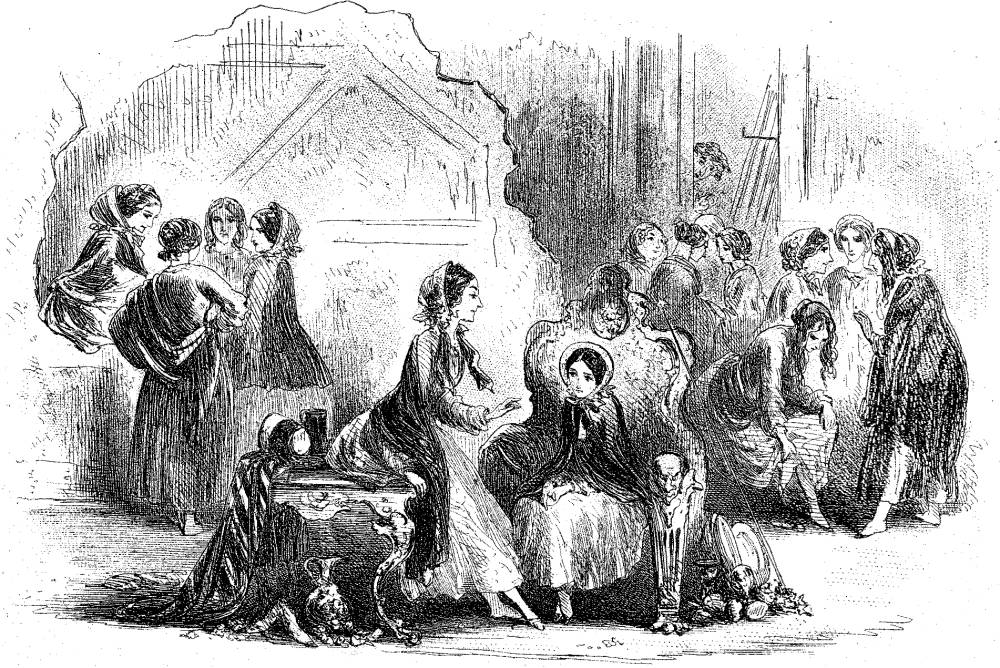
Little Dorrit is one of Charles Dickens last (his eleventh, to be exact) and lesser known novels. It follows the main character, Amy "Little" Dorrit, who, because her father is a debtor, is imprisoned in the Marshelsea Prison of London. The story is a classic rags-to-riches story, in that the family regains their wealth, but it also twists this storyline by making sure no one is actually happier for it. Meanwhile, Arthur Clennam, a friend of the family, is discovering that his connection to the Dorrit family is much deeper than he realized. The novel is famously based on Dickens's own personal experience with debtor's prisons. (His father having served time there himself.)
 There are a lot of good things happening withing Little Dorrit. The central metaphor of the novel (the prison as existing in more ways that simply the obvious one) is explored in multiple ways. When the Dorrit family becomes respectable once again, they become entrapped in the expectations of their class, which of course means that everyone continues to suffer, especially Little Dorrit herself, who finds it difficult to simply forget the entire beginning of her life. Every character within the novel is imprisoned in some way or the other. Mrs. Clennam is imprisoned to her chair and her house because of illness and old age. Arthur Clennam is imprisoned by societal norms and his family's own poor choices. Mr. Dorrit is imprisoned not only by his debt and later society, but by his own pride and ignorance. Every marriage (except the last one, of Dorrit and Arthur) is a marriage of convenience, based on money and social standing; no one is in love with one another. Many of the women within the story are imprisoned by ideas of what women should or shouldn't do. Those female characters who stand up to those ideas are shot down and those who acquiesce are miserable.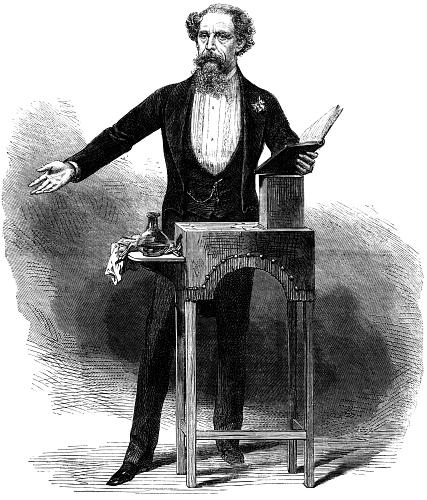
But the novel is also has troubling parts. Little Dorrit as a character is an idealized woman of the 19th century: industrious, loyal and quiet. She is always working for the men in her life, mostly her father, but later on for her husband, Arthur Clennam. She never asserts her own needs, always simply doing as they demand of her, regardless of what it does to her emotionally.
The "bad girls" of the novel, the ones that are annoying, selfish, and apparently undesirable, are the ones who are more independent. Flora, Arthur's once flame, is now a widow, and is independently wealthy. So she's apparently not good enough for Arthur to desire anymore (or for the audience, who sees much of this novel through his eyes, despite the fact that the title is of a female character.) Fanny, Dorrit's sister, is undesirable because she is a woman who works for herself and because she is determined to marry whomever she wants, so clearly, she must also be a catty, witchy woman, the kind that the audience is suppose to find detestable.
Other women are demonized within the novel. Pet spurs Clennam's affections, so clearly she has to be miserable for the rest of her life with an artist husband. Tattycoram, a young woman treated as a slave by a family who insists they are good because they have "adopted" her, is mocked in the novel for being stupid enough to run away. And Miss Wade, another woman, is motivated only by revenged at being jilted by her once lover. Women are nothing more but examples of "good" and "bad" behavior, the good girls being the ones that do as they are told and the bad girls being those who somehow threaten masculinity.


