Showing posts with label characters. Show all posts

Friday, August 19, 2011

Horrible Bosses Deserves a Promotion

by Jon James

Horrible Bosses starts off with a cast rock-solid enough to sink a body with. Kevin Spacey, Jennifer Aniston, and Colin Farrell star as three supervisors despicable enough to lead average men Nick (Jason Bateman), Dale (Charlie Day), and Kurt (Jason Sudeikis) to consider homicide. Spacey shines brightest, playing a manipulative, demanding, white-collar company president who would probably make a pregnant woman work until her water broke and then bill her for carpet cleaning. Aniston delivers a sex-addicted, extorting dentist that makes you really start to see the advantages of Novocain over nitrous gas. Colin Farrell kicks it up with a sleazy, coked-up, chemical-waste-disposal-company heir that would personally dump DDT right into a lake if it would save him ten bucks for more blow. The morbidly-inclined employees bring a synergy that’s not unlike the (original) Three Stooges, if they had turned into a manhunting trio. Day steals the show with a whiny, dim-witted but lovable incompetent that is straight out of his It’s Always Sunny in Philadelphia character, only slightly less malefic. Bateman’s character is also similar to the role he’s known for in Arrested Development, but minus the family holding him together. Sudeikis’ womanizing character leaves something to be desired, though whether that is the actor’s fault or is just a universal trait of Jung’s ancient archetype “Himbo” is hard to say. The three play off each other well, though, and their chemistry really drives the humor part of this dark comedy.
Jamie Foxx also shows up, as a heavily tattooed “murder consultant” whose name would have more asterisks than letters if it were printed here. The character is used to make a few jabs at the racial ignorance and stereotyping that is still present in well-meaning middle class white men, but the character himself stands out as being just slightly more absurd than the other characters, like a mime corpse in a clown hearse. As with many movies with all-male leads,the movie’s next big jokes revolve around homophobic humor. A few of the scenes were funny and contributed to the development of the plot, such as when a urophilic gigolo shows up instead of a hitman, but mostly the jokes are passe and only distract from the tension-comedy waltz that fuels the movie. The pacing is well-orchestrated and effective, culminating in a plot climax that coincides with, well, another sort of climax. The humor and suspense develop up to this point is unrelenting, without a slow moment, and managing to generally avoid the awkward comedy motif that has been in vogue since The Office started airing in the U.S. The plot itself is driven by a decent degree of unexpected twists without falling back on various unjustified dei ex machina. In the meantime, Horrible Bosses manages to take some jabs at such cultural absurdities as movie piracy, outsourcing, stereotyping, and male sexual harassment, while keeping the jokes light and nondistracting.
In all, Horrible Bosses uses its A-list cast well, and revisits the Shakespearean art of balancing comedy and drama. Most of the jokes are fresh, with the exception of a bit of stale homophobic and chauvinistic humor, for which the creators should be berated. But if you’re looking for a refreshing comedy and don’t mind plenty of justification for an R rating, Horrible Bosses is worth a shot.

Thursday, August 4, 2011

Amulet: The Stonekeeper

Spoiler Alert!: Most of the big reveals in this story are given away in this review.
by Courtney Hilden

Amulet: The Stonekeeper is the first book in a graphic novel series that follows Emily and her brother Navin as they struggle to rescue their mom, who has been taken by a tentacled monster. Despite the overly-used premise and nods to other fantasy stories, this first part of the Amulet story manages to feel fresh.
The story opens up on a family vacation, one that ends in tragedy after a car crash kills Emily and Navin's father. Because of his death, their mother moves them both to their ancestral home, which has an opening to a mystical world that Great-Grandfather Silas (still somehow alive) was running with the help of an amulet. Similar to the titled ring in The Lord of the Rings, the amulet's power comes with serious, personal drawbacks, but to save her mother, Emily decides to wield its power. Great-grandfather's gang of helpers, including a bunny-like Misket, help Emily and Navin, and the story ends before readers can know if their mom survives.
The artwork is stunningly cinematic, especially in their color choices and background detail. The monsters feel new, with a strangely combination of the Halloween ghouls of Invader Zim and the many characters, good and bad, from Hayao Miyazaki. The children, Emily and Navin, are perfect cartoon characters, both simple and expressive. (The series is now in the process of being made into a movie, and given the fantastic art, this is not surprising.)
It is also nice that the main hero is Emily and not a young man. So often in fantasy stories that are written for both genders the hero is male. Often, female characters play small roles or ones that confine them to feminine roles (as mothers, nurturers, or even in Avatar: The Last Airbender, where the main female character, despite considerable power, was the one doing most of the cooking and laundry.) Here, Emily is a character who is without an disadvantage that could be coded as "womanly." She is tying to save her last living parent and take care of her younger brother, a role that could have easily been male, but here, thankfully, is not. It is time both young girls and boys read a story about a real girl, one who is brave and well-intentioned but imperfect, and this looks like a great series to do so with.

Wednesday, June 29, 2011

Creepy Creatures

by Courtney Hilden
Spoiler Alert!: Some of the endings of the stories are revealed in this review.

Earlier, we here at Recommended reviewed Terror Trips, a collection of horror stories from Goosebumps told in a graphic narrative style. Creepy Creatures is the same basic format: three horror stories from R.L. Stine. Because this is Goosebumps, the stories are meant to still be appropriate for younger readers. "The Werewolf of Fever Swamp" is about a family that moves into a new neighborhood and finds there may be werewolves living in the forest. "The Scarecrow Walks at Midnight" is about two siblings whose trip to their grandparents farm is ruined by animated scarecrows. And "The Abominable Snowman of Pasadena" is about a scientist father and his children bringing home Bigfoot.
The artwork is all three stories is distracting. Both "The Werewolf of Fever Swamp" and "The Scarecrow Walks at Midnight" have art that is relatively realistic, particularly the latter. The art for "The Abominable Snowman of Pasadena" is much more cartoony, but the eyes are really distracting, with uncolored pupils.
The two superior sections, in terms of storytelling, are "The Werewolf of Fever Swamp" and "The Scarecrow Walks at Midnight." In the werewolf story, in the end, the young man and narrator turns into a werewolf, which, considering these stories are meant to be for children (just about no one ever dies), is surprising. "The Scarecrow Walks at Midnight" is actually interesting because it depicts one of the grandparents' employers, Stanley, who is depicted as having some kind of special need.
It is this character who is the most problematic. Stanley is the bad guy in the story, who has created zombie-like scarecrows based on things he read in a magic book. People with disabilities are often depicted as stupid, pathetic, evil or combinations thereof. In this story, Stanley is depicted as all of them. He is evil enough to use his scarecrows to threaten the grandparents and the siblings, but too stupid and pathetic to effectively control or destroy the scarecrows. No real motivation is given for his actions; apparently his "inabilities" do that for him. No critique of the family that employs him or society that marginalizes someone like him is given (which would have served for a more reasonable and sympathetic motivation.) Instead, he is just bad. Instead, he is just like his zombie-scarecrows; dangerous and needing to be controlled by the employers (easily read here as capitalists) and the abled.
Creepy Creatures is not as good as Terror Trips, both in terms of art and storylines. Creepy Creatures also has some problematic depictions of those with special needs, which discerning parents might want to shield their children from or at least discuss with them.

Monday, February 21, 2011

Threat Level Midnight

by Courtney Hilden

"Threat Level Midnight" was not just the title of the episode, but the title of Michael's movie, that he apparently spent eleven years on. The episode is the movie (an abbridged version, sadly) and the office watching it.
This episode is possibly the best idea the writers have had for an episode. It plays off of already established information (Michael's bad movie script from so many years ago.) One of the best parts of the episode was that it brought back multiple characters that have since left the show (mainly, Michael's ex-girlfriends, Jim's one ex-girlfriend, and that goofy friend of Michael's that no one likes.)
This episode highlights what the show does best: silly situations and Michael's huge, unreasonable ego. All of the actors did a great job acting in the various parts of the movie, perfectly playing both their characters and their character's characters. Andy totally nailed it as a bad actor playing a Jersey man. I also loved how Holly saw how Michael's goofiness, although sometimes fun, is also out of control and frequently is the most obviously immature thing about him. Michael might want to get married, but he has no idea what that would really mean, and Holly is hopefully realizing that the desire to get married does not necessarily make him compatible for her.
Honestly, I would watch a whole episode of just Michael's various movies. Jim's Goldface character was possibly the best villian of all time. Could we please have a sequel episode of Goldface's evil behavior? Please?

Tuesday, February 1, 2011

Chuck Versus the Push Mix

Spoilers Alert: There's only one spoiler in this episode, and it involves the antics of Jeffster.
by Courtney Hilden

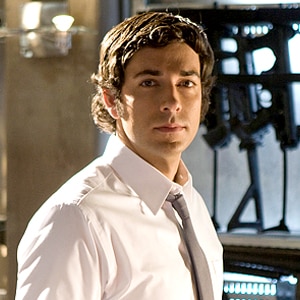
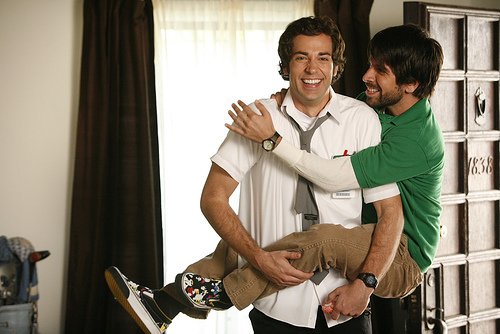
This time on Chuck, our hero demands that Sarah be brought back home after she pushes Casey out a window, nearly killing him. As usual, the General refuses. Sarah, meanwhile, is working with Chuck's Mom to bring down Volkoff. Which would probably happen without Orion, back from the dead, showing up.
Chuck frequently has episodes that are about pushing the storyline farther. It is actually one of the nice things about the show, since it means we do not dawdle with storylines and instead go from one necessary event to the other. So even though this episode had some important events, for the most part it was not as fun or as engaging as the show usually is. (Though, it still manages to be one of the best written shows on television and definitely the best planned.) The highlight of the night? Jeffster singing "Push It."

I was truly afraid that the laser chamber was going to feature extremely distasteful images of Morgan. It was bad, but not as bad as it could been, and I appreciate that.
As much as I am enjoying the Alex and Casey scenes, I wish we'd see more of Alex's Mom. I would much rather see a Casey/long-lost love romance then this creepy and inappropriate Alex/Morgan thing.
In terms of other great characters, the General is the most unsung character on this show. She manages to be perfectly respectful and adorable at the same time. It's too bad we only see her so frequently doing her broadcasts to Castle and not in person.
Sarah is starting to look a look like Prue from Charmed with her black hair, so I guess it's a good thing that she is done with her mission and will be back to normal with her typical blond hair. Giving Sarah black hair to represent her "turn to the darkside" was lame, especially since the audience and other characters know who she is.

Monday, January 24, 2011

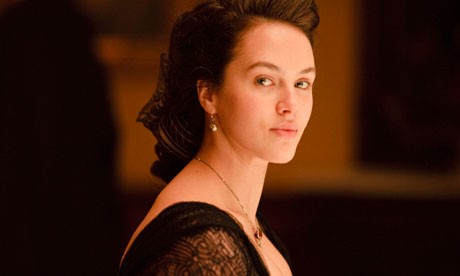
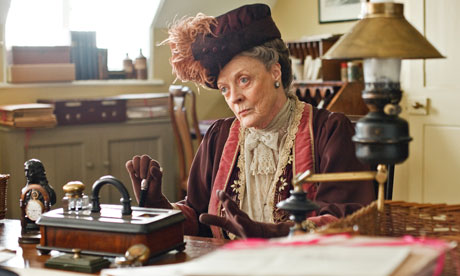
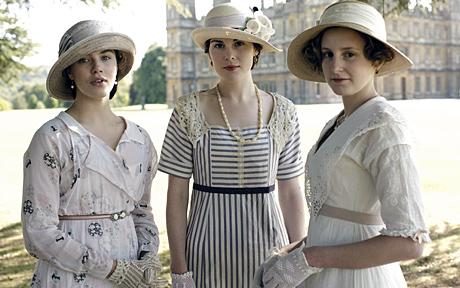
Downton Abbey: Episode 3

by Courtney Hilden

This time, in the penultimate episode of Downton Abbey, the carnival comes to town! Which mostly means various couples try their luck with each other and fail (or in the case of Matthew and Mary, fail again.) Then Grandma has her revenge by knowing some medicine and letting poor Mr. Mosley win the flower competition. And if there was not enough cattiness between Grandma and Matthew's Mom, don't worry: Mary and Ingrid are still at each other's throats.
If this makes it seem like not much happened in this episode of Downton Abbey, well, yes, not much did. Even though not much developed in the way of the story, not the way the previous two episodes did (or, the fourth episode hopefully will), it was a mostly enjoyable episode. Most of these characters are interesting enough at this point that just watching them interact together is enough.
As usual, the politics of some of the things going on are troubling. Thomas must be the most hurtful person on earth, asking Daisy out, even though he knew that William was interested. But at the same time, there's something bothersome in the character of Thomas. He is a terrible human being, but because he is also interested in men, making him into a villain is just another way of making gay men evil, and really, there are enough villain-gay men in the world. Even one of the cooks described him as a "troubled soul," which, although slightly more forgiving than some viewers might be inclined, is still sad. Would it really kill this show to depict how both lonely and scary being a closeted gay man in a homophobic world? Or are they too busy making him into the bad guy, who, at this point, I have concluded probably had the Turkish gentleman poisoned in revenge. It is the sort of terrible thing this show would do.
It is so nice, so refreshing, to have a miniseries that engages with the problems of women. Sadly, it is high class women that are mostly explored, but Mary's struggle to accept "just marriage" is sad to watch. It is interesting to note that Mary is not the one who takes up feminism, but her younger sister Sibyl, even though feminism has just as much to offer Mary as it does the other women. "The world is changing," Countess Cora says to Mary, "just not fast enough for you." Mary is right to be angry that no one wants to fight for her.
The show also gave Mrs. Hewes a difficult choice: continuing her job at Downton or marriage to the man she spurred many years ago. She chose her job (and, in modern parlance, her career), but there was something sad about this. She too, is limited by the roles appropriated for women. She can be a career woman or a family woman, but she could never dare be both. Also interesting to note that she did not even consider love in her decision: she never said she loved her beau, just that he was "nice man."
The cutest couple award for this show goes to Sibyl and Gwen. Sibyl, a budding young feminist, is all about helping out Gwen the maid become Gwen the secretary. So far there has not been any luck, but Sibyl's encouragement (and the lending of clothes) has been heartwarming to watch. They are both nice girls, and I would really like to see a full-blown romance develop between them.

Tuesday, January 18, 2011

Larger Than Life

by Courtney Hilden

In this latest episode of House, a man, spending time with his daughter, tries to desperately save a random woman from a train. Then he himself begins to have medical problems, opening up another round of cynical House and optimistic Masters.
As someone who lives in New York, I can tell you that the opening sequence, of a man trying to save a woman having a seizure who is stuck on the subway track, is one of my nightmare's. The horror of fellow subway passengers, desperate to know if he was okay and their held breaths at the thought he didn't make it, rang all too true.
House also brought the talent tonight, including Matthew Lillard (how is it possible that he is old enough to play a father?) and Sprague Grayden (from the cancelled-too-soon John Doe). Watching these two was watching a master class on chemistry. The history between their two characters was totally believable. Can someone make a show about this couple?


Other good things about this episode including the cinematography, which took a different take on the show, focusing in on characters as the scene runs. Usually a show this far in does not do anything different, especially for a normal episode, but here it was noticeable because so little else in the episode was.
Sadly, none of these touches could make up for the overall show, which is saddled with an increasingly unlikeable character. House really does not deserve the people in his life. The nice thing about the show once upon a time was watching him struggle with kindness, but here House was, trying to get out of dinner with his girlfriend and her Mom on her birthday and then trying to get out of his best friend's festival. At this point, House is just spinning his wheels. And given Hugh Laurie's phenomenal performance, maybe he should just be teaching acting instead of trying to make something enjoyable out of this poor writing.

Monday, January 10, 2011

Downton Abbey: Episode 1

by Courtney Hilden
Spoiler Alert!: Some of the episode's best surprises are given away in this review.

Downton Abbey, Masterpiece Theatre's premiere show this season, centers on the title house and the two classes of citizens it contains: the elite, wealthy family and their servants. In this first episode, Robert, an Earl and patriarch, discovers two of his relatives, and heirs to the estate, have passed away aboard what is certainly but not named to be the Titanic. This causes Robert's wife Cora to try to gain part of the estate for herself and her eldest daughter, Mary, and for Robert to invite the new heir, Matthew Crawley, to the estate. Meanwhile, the "downstairs" family deals with a new servant, who, because he was wounded a war, has trouble fulfilling his duties, but much more trouble because most of the other servants treat him so poorly.
It's not as if anything is wrong with the show, it just feels very much like other movies and miniseries that also feature both the wealthy family and servants, and in fact, there doesn't seem to be anything different from this than other earlier shows. So we trend on the familiar ground of the servants and the family and their intertwining drama. The servants, of course, have the more interesting, lesser-seen drama. The family's drama has been part of so much of the Masterpiece stories and Austen adaptations as to be boring to anyone who is familiar with either. This is, after all, the same situation Mrs. Bennett was trying to prevent in Pride and Prejudice, which takes place some one hundred years before. At least in this version, the economic situation of the elite female characters is not avoided. Countess Cora spends time trying to get some money to live off of, but she is blocked even from trying to get her dowager money back out of the estate. In a system like this, the economy is structured to take from women (their bodies, ones that are forced to stay sexually monogamous) and give them nothing or close enough in return.
There are some highlights in terms of great characters. The eldest daughter, Lady Mary, shows a delightful lack of care towards her dead fiance, a perfect reminder of the love that was not present in these marriages.
The show also deserves credit for having a "lame" character. John Bates had served Robert in the "war with the Boers", and now has taken a job as Robert's valet. The show does an excellent job at depicting both how relatively fine Bates is at his job and the way the majority of servants look down on him for his disability. "Crippled" characters are few and far between on television, so it is nice to see a show that depicts him in a way that is judgemental of those who are judgemental of him.

Unfortunately, the depiction of homosexuality leaves much to be desired. Thomas, the first footman, spends time scheming (first against Bates, then later against his former lover). The other gay character spends time manipulating Thomas and Lady Mary. Gay men are not evil, and showing them this way just plays into stereotypes and homophobia.
As for the next episode, it seems obvious that the solution to the problems of the estate rest with the lawyer, Matthew Crawley. Countess Cora would be wise to enlist Crawley to figure out how to separate her money from the rest of the estate or to simply let her have it, as that is what would make both him and Cora happy.
So, even though the show manages to create sympathetic female and disabled characters, ones who are forced to fight through difficult circumstances, the show fails a rounded depiction of homosexuality. It acknowledges their difficulties of being so closeted, but tonally makes the judgement on them that they are dangerous. Coupled with the already-explored aspects of the story, Downton Abbey is somewhat admirable but in no way splendid.

Tuesday, January 4, 2011

From Dead to Worse

by Courtney Hilden
Spoilers: This review gives away almost all of the surprises of this books.

When sitting down to review From Dead to Worse, the eighth book in the Southern Vampire Series, I found myself wondering what I could possibly say as to what the plot was. The plot was really several episodes thrown in together. One involves Sookie meeting a new, mysterious (of course he’s mysterious, this series is nominally a mystery series) relative, another has a Nicene war within the local werewolf pack, another features a hostile takeover, and finally there’s a broken marriage thrown in for good mix. The plot sort of meanders along, and although this would usually be a good thing, it is unlike previous books in Harris’s series, and feels less controlled. This tight, no-flab writing was one of the most admirable things about Harris’s series, which lacked the bloat of other popular urban fantasies and romances. The book felt like Harris is setting up for something else (what I do not know, as I have yet to read further), maybe giving us pertinent information for future books, but otherwise feeling like a letdown.
The other majorly disappointing thing about the book is staving off (yet again!) the romance between Sookie and Eric. Eric, finally remembering everything that took place four books ago, has yet to have an important “talk” with Sookie. This is getting dragged out to the point of boredom. And also, when is Bill going to disappear? His earliest scene, talking to an undressing Sookie, felt forced, and in light on the events of the book, was totally unnecessary to the rest of the plot. His later moments in the book, talking to her on her porch and then arriving at her house during a crisis, felt more like a way to insert an otherwise useless character into the plot and way to compensate Bill/Sookie shippers for having thrown in their lot with not only a jerk of a character but a bland jerk of a character. He is the sort of person, excuse me, vampire, who desperately needs a hobby.
It seems increasingly unlikely that Sookie would still want Bill, given that he has not done much other than talk about wanting to love her. Meanwhile, Eric has shown all the initiative to respect her enough to be there for her when she meets her mysterious relative (telling her he’s there for her but backing off and allowing her to make her own decisions.) And he has shown pragmatism and care for his followers and employers. Of all the tyrants in this series, he is the least interested in power for power’s sake and the unhappiest with what power he has. Why can’t Sookie see that?
Also getting more “page time” in the series is Sam, who was also steadfastly by Sookie’s side throughout the book, helping her when he could. His back story near the end felt a bit rushed, but otherwise Sam’s a lovable character, and a great match for Sookie too.
The last quibble with this book is over lesbian relationships. Even though Amelia could be in either a heterosexual or homosexual relationship, and the book flirts briefly with Amelia and Pam as a couple, Amelia’s longer relations are always with me. Other women with women pairings are shown in earlier parts of the series as dangerous, and there’s something deeply sad and disappointing about this.
Readers could do worse than this series or even this book, which is one of the lower books within the series. The writing is still interesting, the world still imaginative, and there was even a surprise or two.

Sunday, December 19, 2010

Colombo Oreo

by Courtney Hilden

The episode, "The Doctor in the Photo," was heavier than a Thanksgiving dinner and surprisingly angst-y, though in a quiet way. Bones got a case involving a brilliant scientist who was murdered in a dangerous neighborhood. Like Bones, the victim had rejected the love of a coworker who was polar opposites from her, and probably regretted it. Bones begins to over-identify and spirals into a magical realism episode.
This was an interesting opening, showing some of our characters, having Thanksgiving dinner. Don't worry, it wasn't a mushy scene, as Bones even had some time to use her forensic powers to tell how the turkey died.
Watching Bones suffer through the love of her life's great love life with someone else, who is normal and slightly imperfect but impossible to truly demonize, was painful. Watching her struggle over how unmissed this episode's victim was torture. The team mostly went unaware of her unhappiness and there was something quietly sad about that too, especially Booth's ignorance of Bones's emotional state, though given the last year of this show, where Booth has struggled to understand Bones's emotionally, this is typical. "Doesn't anyone know me?" Bones asks Sweets when everyone does say something to him about her emotional state. Then Sweets gave us an analysis that anyone watching this show would be able to give us. (Can't we give Sweets more to do? Can't he say profound things that haven't already been beaten into the audience's head?) The person Bones really needs and wants to have these heart-to-hearts with his Booth, not Sweets, but to some degree, Booth is unavailable for them.

Possibly this is one of the best episodes of Bones, ever. It was a challenge to show, within the course of only one episode, her progression to the conclusions she made, but this episode handled it brilliantly and without the usual cliches. More episodes should have us diving into the psyches of the characters, and show how bizarre and thoughtful they are.

Sunday, September 26, 2010

Nepotism

by Courtney Hilden
Spoiler Alert!: Everything except the B-story line is spoiled in this review.

"Nepotism" the opening episode of The Office's last season with Steve Carrell, was about Michael hiring his nephew from a part of his family he is estranged from (which itself might have been a good story.) Luke, Michael's nephew, was every awful stereotype of "kids these days." He was lazy, he seemed almost gleefully incompetent (in a far more malicious way than his Uncle), and he liked The Boondock Saints. Given the audience make-up of this show, there was something strangely nasty about this character, and it felt like a commentary on those who actually watch The Office.
The opening, featuring (almost) the entire Office trying to make a YouTube video, was entirely too cute. And from there, the episode rolled from one great moment to another. Michael's stupid God and Jesus argument was another classic moment of Michael narcissism and stupidity. Most shows in their seventh season start to slow down, but this was a relatively strong episode, even by Office standards.
There was an unusually high amount of awkward-funniness. The spanking comes to mind. Michael's spanking of Luke was horrifying on some basic level, and then the various characters replicating the moment was awkward, especially Dwight's spanking of poor Andy, who has gotten metaphorically spanked enough on this show.
The episode contained a few surprises. The first was Gabe and Erin now in a romance. Gabe and Erin make a lot of sense, since both of them are so socially awkward and well-meaning. Erin acknowledging that she felt compelled to date him because he is her boss's boss was uncomfortable. It was also sad that the show has not (so far) alluded to what a problem in the workplace this is, especially for women. Part of me hopes Andy handles it as relatively well as he has so far, but part of me would love to see him descend back to that angry place he was when he first joined the show. Andy's anger problem was so tidily solved a few seasons back that it seems appropriate to bring it back, and show how a problem like that never really goes away.
Great lines of the episode:
"It got infected, even though I peed on it." -Michael, explaining an infection, completely unaware that peeing on something is for sting rays.
"Nard Man is my Father." -Andy, explaining why he is suppose to be referred to as "Nard Dog."
"What's up, Venus?" -Luke, to Phyllis.
"My favorite part of an ice cream party is the bagel chips." -Oscar
"He can swim in my pool; he can't come in my house." -Jo, explaining to Michael how she treats her nephew.
"He's totally going to get Pammed!" -Pam on her prank for Dwight.
"Everywhere I look it's Betty White this and Betty White that." -Creed, on Twitter.

Saturday, September 25, 2010

The Mastodon in the Room

by Courtney Hilden
Spoiler Alert!: Some of the early details of this episode are totally spoiled in this review. The crime itself, however, is not.

In this episode, where they "get the band back together," as it were, opened up on vacation clips of what various characters were doing. It was about as boring as actually vacation clips of characters doing things. It was sort of a lost opportunity, since the episode could have shown various characters doing legitimately interesting things in their various locales. Having a few episodes that focused on characters that were finding themselves deeply embedded in mysteries where ever they were and realizing they missed the work and their teammates would have been great. They would have given the actors, especially the lesser characters, a chance to have an episode all to themselves. Instead, they were just suppose to give us a taste of what they were doing, which was apparently exactly what you expected: Daisy still be annoying in Indonesia with Brennan stoically carrying on, Booth saving the day in Afghanistan, and Cam about to douse her career into flames.
Why was Cam's apparently impending career fail the genesis for bringing these characters back together? Somehow, this felt totally false. The case felt like a reject case from lots of other police procedural shows. Another case, a much bigger case, should have brought the characters together, or even better, a character's death should have been the case that called all the characters back to D.C. (Maybe they could have killed off one of those annoying interns. I'd still vote for Daisy, who is still so annoying and socially clueless that it's a shock Sweets has not diagnosed her on the autism spectrum.)
The episode was unrealistic in a lot of other ways. Daisy was beyond stupid to bring her engagement ring to Indonesia. She was dressed totally inappropriately with her skimpy underwear and cute clothes. (And was the camera's focus on her butt in an early scene necessary? No, it wasn't.) The only good thing about these Indonesian scenes is that Brennan was at least capable of wearing clothing that was practical for the environment and that did not do her any favors.
The costume choices continued to be strange throughout the episode. Sweets looked terrible doing the jazz look, but this was hard to notice, giving his terrible facial hair. His new look makes him look like an extra from Shakespeare in Love, and not in a good way.
On a feminism note, Brennan's comment to Booth that she had to beat people up because he "wasn't there to save her" was totally out of character, considering the pilot episode showed her perfectly capable of beating people up herself and not needing the least bit of help from Booth. What happened to that Brennan? Is she still lost out in the jungle?
Cam's anger at Brennan for pursuing the career she clearly loves was uncalled for. It smacked of all that "women need to sacrifice everything for everyone else" rhetoric. If Brennan had been a man, no one would have blinked at the decision to go do research in Indonesia. It also just reeked of trying to create drama for drama's sake. And it was another example of how unrealistic this episode was. If a program was that important to both the Jeffersonian and the FBI, someone would have stepped in to keep it going. And, given the reputation that Brennan apparently has, forensic anthropologists would have probably fought over it.
This doesn't mean everything in the episode was bad. For example, most of the interns are now out of the picture, leaving the least irritating one, Wendell. (Too bad about Nigel Murray. He had real potential.)

Wednesday, September 22, 2010

Detroit 1-8-7

by Courtney Hilden
Spoiler Alert!: The mystery's ending is revealed in this review.

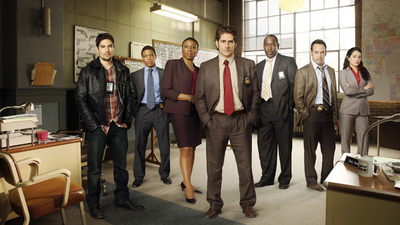
Given the city of Detroit's reputation as the world's most dangerous city, Detroit 1-8-7, a cop show, should have probably existed before. Given the show's depiction of race, it might be possible to imagine that this was the reason the show as only just premiered. The show's depiction of race is not outright racist, but there are some strange moments that deserve dissecting:

1. Although it is great to see so many of the characters are people of color, it is sad that the main character, Finch, is white. Detroit, save its metro area, is predominately African American, and it feels wrong that the story is told from a white perspective. A story set in Detroit should be told by a person who does a better job of representing its population.
2. It is also really sad that the comedy is being done mostly by the sidekick African American character, Washington. He is inept, he is comical, he is suppose to be a minstrel character, which is so disappointing, again, considering that he is a better representation of the city's population than Finch.
3. Some of the suspects were white, which was a nice change of pace, considering so many of the bad guys on other cop/detective/procedural shows are minorities. Two of the suspects, including a drug addict, were white. The night's bad guy, James Burke, was white. Although many (white) people imagine that there is a lot of black-on-white crime, the case is actually the opposite. Within the episode, the bad guy committed violence against both whites and African Americans, again, different from the mainstream, white imagination. Of course, the drug dealers were African American, so for every bit of progress of racial subversion, something typical and cliche seemed to happen.
4. The episode also depicted an interracial family, one that was sadly dealing with a father in prison and a recently-murdered mother. No comment is made, by anyone, on the fact that a white woman was raising her biracial grandchildren with her African American daughter-in-law. Is this what the so-called post-racial America looks like? Imaginary Detroit?
5. The choice in homicide itself was significant. If you have ever watched Detroit News, you know that the most common murder appears to be the "Baby Momma Murder." By that, I mean husband/boyfriend kills his wife/girlfriend, who is almost always the mother of his children. It is so common that these murders are barely given more than thirty seconds on the news. Often, these murders involve only African Americans, but here it involved a biracial family, one where the white man was killed his African American wife and tried to kill his biracial kids and white mother. This was both confirming to certain ideas about murder in Detroit but also subverted it. It adheres to an all-too-common and tragic story, but it also changed the stereotype, by showing white men just as capable of that sort of violence that is so linked to African American men. It implicitly questioned the idea that this violence is inherently linked to African American men, who are so frequently stereotyped as dangerous savages.

Some other non-race-centric notes about the pilot episode:
1. I also loved how the medical examiner does roller derby in her spare time. Finally, a cop show where the characters at least make attempts at having a life outside the job. And points for giving her a cool, feminist-hailed hobby.
2. The phone conversations between our two main characters, Finch and Washington, were an interesting detail. Previously, the audience had been led to believe Finch is unable to express himself. Those calls show he is capable, he is just choosing not to do so.
3. And finally: Coney Islands! Any good Detroiter can tell you their favorite Coney, and usually knows what is best at a few of them. Points for adding something all too real.

Tuesday, September 21, 2010

Chuck Versus the Anniversary

Spoiler Alert!: This review reveals everything about the episode.
by Courtney Hilden

In the season premiere of Chuck, our title character tries to both find his Mom and find a job (neither of which work out,) Chuck's Mom makes a few appearances (in a flashback, watching her son look for her, fighting bad guys), Sarah and Casey are so busy on missions they never see Chuck, and the Buy More is resurrected.
There was something reckless and sloppy about this episode. There was way too much they were trying to cram in to one episode. A lot of the other things that usually make this show delightful fell flat or felt lackluster. The humor was not nearly as funny as it once was, and this is probably attributable to the lack of everyone's favorite comic duo, Jeff and Lester. Something about the show feels very wrong and off without them.
Once again, Chuck is making a mistake he has already made: lying to Sarah. This always turns out badly, and Chuck never seems to think about this. Too bad the writers cannot allow Chuck the chance to think about things more. Sarah seemed completely unsurprised by the news that Chuck was lying about something, again. Even with the spy business being what it is, the lying that goes on between Chuck and Sarah is disappointing to watch. It also stretches a certain amount of believability, because it is hard to imagine any smart woman staying with someone with Chuck's history.
The show is wise not to rely too much on Chuck's intersect abilities. On another show, these abilities could easily morph into a deus ex machina, but on this show, they at least are smart enough to use it as sparingly as possible. The truth is that the show is at its best when it adheres to more realistic things, which is why Ellie's comment that jobs "are hard to come by," rings totally true, especially to anyone currently in the job market.
In terms of fight scenes, the best for this episode goes to Chuck's Mom, who had the most badass (but sadly quick) fight scenes. She and this episode's bad guy almost seemed friendly at the beginning of the episode, but that quickly turned sour.
Olivia Munn's acting left much to be desired. Usually the show does a decent job with acting, but her attempts at frigid were more like monotone.
Costume-wise, Sarah has one of the cutest tiered skirts on while discussing with Casey how Chuck does not want to come back to the spy world.
And finally, the show had a wonderful joke about spies when this episode's bad guy mentioned that Chuck and Morgan were smart to use public transportation to avoid detection. There was something about that joke that poked spies and spy movies right in the nose and allowed the audience to consider how too easy it often is for these characters. Getting Sarah and Casey on a bus? Perfect.

Saturday, August 14, 2010

Little Dorrit

 by Courtney Hilden

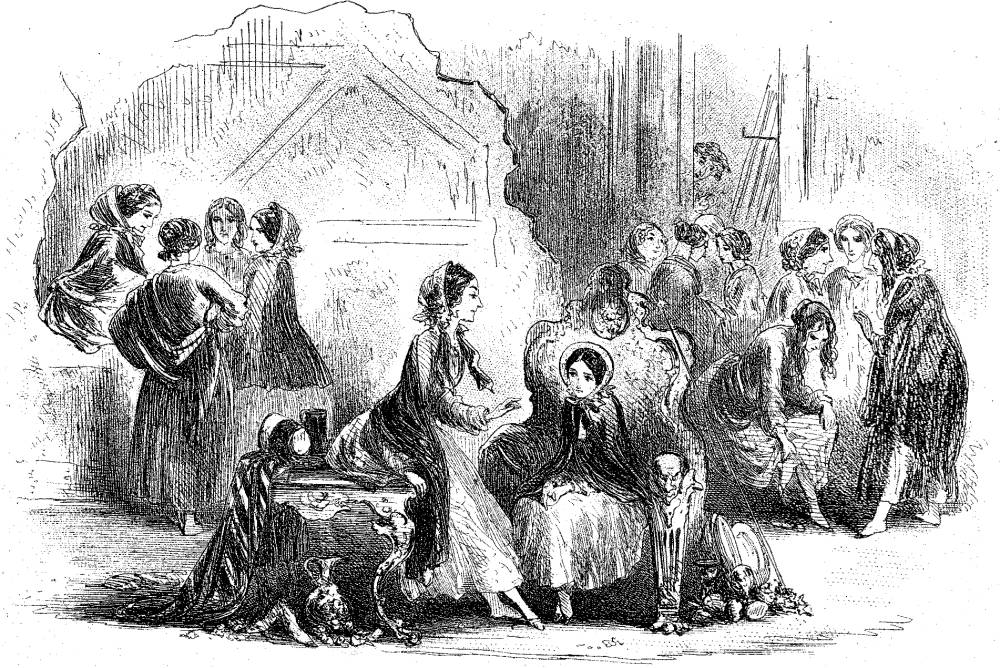
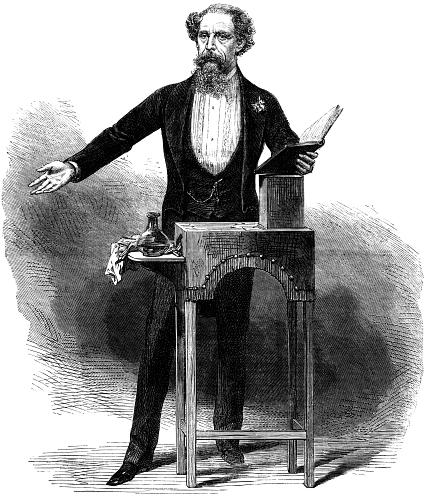
Little Dorrit is one of Charles Dickens last (his eleventh, to be exact) and lesser known novels.  It follows the main character, Amy "Little" Dorrit, who, because her father is a debtor, is imprisoned in the Marshelsea Prison of London.  The story is a classic rags-to-riches story, in that the family regains their wealth, but it also twists this storyline by making sure no one is actually happier for it.  Meanwhile, Arthur Clennam, a friend of the family, is discovering that his connection to the Dorrit family is much deeper than he realized.  The novel is famously based on Dickens's own personal experience with debtor's prisons.  (His father having served time there himself.) 
There are a lot of good things happening withing Little Dorrit.  The central metaphor of the novel (the prison as existing in more ways that simply the obvious one) is explored in multiple ways.  When the Dorrit family becomes respectable once again, they become entrapped in the expectations of their class, which of course means that everyone continues to suffer, especially Little Dorrit herself, who finds it difficult to simply forget the entire beginning of her life.  Every character within the novel is imprisoned in some way or the other.  Mrs. Clennam is imprisoned to her chair and her house because of illness and old age.  Arthur Clennam is imprisoned by societal norms and his family's own poor choices.  Mr. Dorrit is imprisoned not only by his debt and later society, but by his own pride and ignorance.  Every marriage (except the last one, of Dorrit and Arthur) is a marriage of convenience, based on money and social standing; no one is in love with one another.  Many of the women within the story are imprisoned by ideas of what women should or shouldn't do.  Those female characters who stand up to those ideas are shot down and those who acquiesce are miserable. 
The novel is considered one of Dickens's most radical and severe works, and it's easy to see how much he detests certain institutions within society.  His chapter on the Circumlocution Office (meant to stand in for the British bureaucracy at large) is the sort of writing that would make Sinclair Lewis proud.
But the novel is also has troubling parts.  Little Dorrit as a character is an idealized woman of the 19th century: industrious, loyal and quiet.  She is always working for the men in her life, mostly her father, but later on for her husband, Arthur Clennam.  She never asserts her own needs, always simply doing as they demand of her, regardless of what it does to her emotionally.
The "bad girls" of the novel, the ones that are annoying, selfish, and apparently undesirable, are the ones who are more independent.  Flora, Arthur's once flame, is now a widow, and is independently wealthy.  So she's apparently not good enough for Arthur to desire anymore (or for the audience, who sees much of this novel through his eyes, despite the fact that the title is of a female character.)  Fanny, Dorrit's sister, is undesirable because she is a woman who works for herself and because she is determined to marry whomever she wants, so clearly, she must also be a catty, witchy woman, the kind that the audience is suppose to find detestable. 
Other women are demonized within the novel.  Pet spurs Clennam's affections, so clearly she has to be miserable for the rest of her life with an artist husband.  Tattycoram, a young woman treated as a slave by a family who insists they are good because they have "adopted" her, is mocked in the novel for being stupid enough to run away.  And Miss Wade, another woman, is motivated only by revenged at being jilted by her once lover.  Women are nothing more but examples of "good" and "bad" behavior, the good girls being the ones that do as they are told and the bad girls being those who somehow threaten masculinity. 

Wednesday, July 28, 2010

"He May be Blood, but He Ain't Family"

A review of "I Have a Right to Sing the Blues"
by Courtney Hilden
Spoiler Alert!: Some of the surprises at in this episode of True Blood are given away or eluded to.


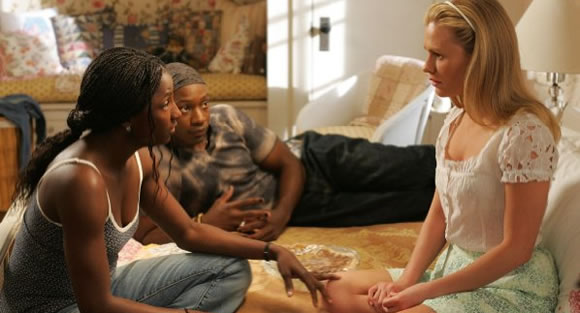
In the latest episode of True Blood, Jason continued to woo Crystal, only to discover that she is engaged to another man (who also looks like he is perpetually in a bar fight.)  Crystal is bringing out the sweetest and gentlest aspects of Jason and will hopefully this will distract him from his desire to become a cop without doing anything to earn being a cop.  Lafayette spent a day and evening with Jesus, only to have it ruined by a bunch of rednecks who beat up on Lafayette's new car with a baseball bat.  Tara was able to con Franklin into letting her out of her chains, and attempted to save herself and Sookie. Sam discovered what was really happening to his little brother, and went out to try and save him.  And the King of Mississippi discussed how much he hates normal humans. 
Lafayette and his new beau, Jesus, deserve the award for cutest couple on the show.  I'm terrified that Jesus is going to turn out to be a bad guy, as so many of the romantic potentials on this show turn out to be exactly that, especially when he got going on his religious beliefs over the Gods that Lafayette has in his house.  It was heartbreaking to watch a group of homophobes take down Lafayette's car, because it lead to Jesus realizing he didn't want to be around them.  
Erik's desire for his father's crown looks like it's going to be his motivation for the rest of the season.  It's a pity, since Erik is usually so much more interesting and complex than this.  The only good thing that has come of this storyline so far is that it has allowed the audience to see a man using sex to get what he wants, instead of just the female characters on this show. 
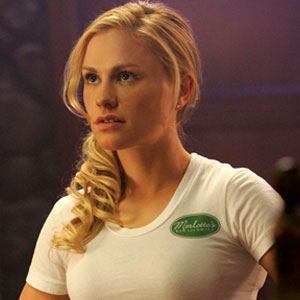
The costume people deserve points for their great work with Lafayette's costumes alone, but this show also had a great moment in women's costumes, when a customer at Merlotte's was wearing curlers in her hair.  What a hilarious costume.  Sophie-Ann, meanwhile, is also rocking out a great queenly look crossed with a business power suit crossed with the 1920s.  All the blood on the Lorena's costume in the second half of the episode was also perfect.  It's a little sad to see such pretty clothes being destroyed, but it also looks great and goes well with the horror tone of the show.  Melinda's nice blouse and combed hair was also a nice change for her, who has always looked liked she was rolling around in mud.  
It's also a relief to see Tara attempting to gain some control over her situation with Franklin.  It's good to see she is smart enough to realize how to get to Franklin and how to manipulate him, hopefully to her gain.  It's also a pleasure to see Tara and Sookie planning to save each other.  So many shows have men saving a damsel in distress, or, if the audience is lucky, a woman saving the day.  It is a nice change of pace to see a woman attempting to save herself and another woman.
The season seems to have a lot of people trying to save each other, or save themselves.  In Sam's case, he's trying to save his family, which are doing things he has only started to glimpse.  His own mother's belief that he isn't truly family is heart-breaking, given how much he does want to save them.  
In the not-so-good department, Sookie and the King's question and answer game was one of the longest, drawn-out and boring scenes, which is sad because it's suppose to be one of the most terrifying moments on the show.  The entire storyline involving Bill's time in Mississippi is long and boring.  The more characters it brings in, even the great ones, do not help the situation.  The only good thing that has come out of this storyline is Bill's small speech to Lorena about how much he wished he could have seen her before she turned.  It was the beginning to the great break moment between Lorena and Bill. 

Thursday, July 22, 2010

Trouble


Spoiler Alert!: Certain details of the latest episode of True Blood are revealed in this review.
by Courtney Hilden

Given the nature of True Blood, with it now multiple storylines all moving at once, it seemed more effective to simply work through each plot instead of trying to analyze the work has a whole, which it in some ways is not. Let's get started:
-The scene with Franklin texting for Tara was funny, but still very squishy, given how messed up Franklin is. It was such a relief to see her get out of her robes and make a run for it, especially since watching her confined episode after episode was disheartening. They're obviously working the battered woman syndrome, where Tara feels genuinely bad for hurting Franklin, though he's obviously the one hurting her.
-Kenya is so smart and capable. Hopefully we'll see more of her soon. Given the storylines with some many female characters who are submissive to men, it is nice to have one who demands respect from her co-workers. Also nice is the power that Sookie appears to be developing. Hopefully this will allow her real power amongst the mostly male supernatural characters.
-Looks like Jason is not going to leave the whole "being a cop" thing. It's too bad, because after last season, I was hoping that Jason would evolve as a character, and instead he's doing the same thing he always does, just with more resources at his disposal for trouble. Although it seems clear from his running Crystal down in a cop car that he at least understands what cops do in porn films, so maybe that is a sign of progress. In the books, the "romance" between Crystal and Jason is mostly physical, but here they have decided to change it so that it is more of a Romeo and Juliet style story, in which both of them are from different groups of people. Of course, what Jason does not yet know is that she's not just from Hotshot, she's also supernatural, and will change him into something supernatural. The actress who plays Crystal is lovely.

-Would someone put a gallery together of all the great outfits Lafayette wears? That man has a great sense of style. Lafayette being so unfamiliar with romantic attention was so cute.
-Also dealing with romantic attention was Jessica. Hoyt showing up to her workplace with a girl was the ultimate in hurtful.
-Sam's family problems are so hard to watch. Sam is not stupid, which given the majority of the other characters on this show, is refreshing. It's good to see that he at least sees things as a problem, unlike Jason who does not even try to improve or Sookie who runs into everything and every man that looks like a bad idea. Again, Sam's family problems seemed centered around abuse, just a slightly different abuse than the one poor Tara is experiencing.
-Speaking of family, Eric is clearly worried for his vampire daughter. His loyalty to his own is admirable, especially considering how everyone else concentrates on what a jerk he is. His backstory about being a Viking prince has been, by far, the only interesting backstory this entire series. Not that we need more of them, since they generally do not illuminate much about the characters they show.
-And finally, Terry Bellefleur is so sweet. Watching him cry over his about-to-be normal life was so darling.

Tuesday, July 13, 2010

"There Are Things God Will Never Forgive"

A Review of Murder on the Orient Express
by Courtney Hilden
Spoiler Alert!: Some of the clues to this shockingly good mystery are revealed in this review.

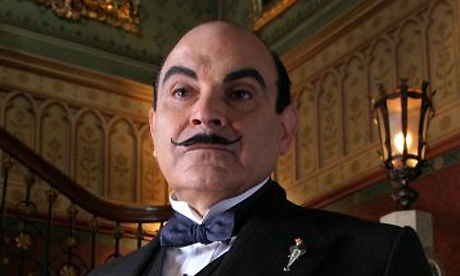
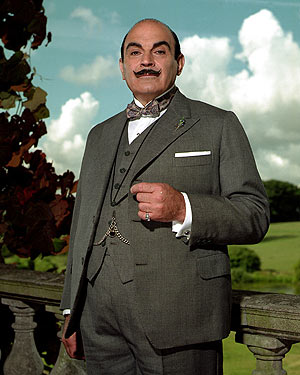
There are few murder mysteries that are recognizable even to non-mystery fans: Ten Little Indians, The Fall of the House of Usher, The Girl with the Dragon Tattoo and Murder on the Orient Express. The last has recently been adapted for a movie, and it blows most mysteries out of the proverbial snow drift, painting everything in snow white and murky gray, meditating on faith and justice, filled with hubris and the empty feeling of being near death, leaving the main character and the audience as cold as the winter world outside the train cars on the Orient Express.
The story follows Poirot on a trip aboard the title train. It is only through befriending the train's owner that he secures for himself aboard. Sometime the first night the lodger in the room next to him dies after being stabbed several times in several odd ways. Poirot, despite his reluctance, begins to solve the crime.
Smart choices are made by the creators. The music during the opening scene (in which Poirot gives one of his celebrated analysis-turned-interrogation only to have the criminal commit suicide in front of him) is dissonant and perfect, like the sound Lost used to signify it was flashing back, forward, to the side or where ever else that show wanted to go.
Toby Jones, last seen playing the Dream Lord on Doctor Who, brings another thankless but great small performance in the role of the victim. He gives us no question to his vileness or how he is used to getting what he wants, but leaves us to ponder his repentance. David Morrissey and Hugh Bonneville also give their normal level of top-notch performing.
There are even brief moments of humor in an otherwise deeply serious film. At one point a character uses the word “Bastard” and then apologizes, asking everyone to excuse “her French.” “It is indeed a French word,” Poirot replies.
Thematically, the connection between faith and justice is made. Poirot, a Catholic, believes in justice through the courts, yet many of the other train passengers clearly believe in picking up where God, if he exists or not, exacting revenge. Shots of rosaries, one of the few things that could logically be on a train are used throughout. The thing that is particularly smart about all of this is that the story never makes a blatant judgment on the moral standings of these characters. It would be easy to descent into this, but by making no one right and no one wrong, the audience if left to contemplate the nature of right and wrong on their own. Films without answers are always the ones that stay with us the longest, and, even though the mystery of who murdered the train passenger is solved, the mystery of what is right and wrong, of what God asks us to do, and what justice really is remain as mysterious as the murder was in the beginning.

In most films with this kind of moral conundrum, the murderers would then be shown as self-made monsters, who, now that they have taken the law into their hands once are willing to do it once again. Instead, they wisely speak to one another, as a counsel, as their own appointed God, and this leaves their previous actions look all the more noble, since they are capable of sticking themselves to a very hard, though different from Poirot’s, moral standard.
It's not a flawless film. Poirot's habit of speaking in third person is still irritating.
The film also flirts around an Imperialist interpretation of the so-called Middle East. Turkey, where the film begins, is depicted with every stereotype of the region you can think of: violent, hateful towards women and uncivilized.
Poirot himself has always been the weakest thing about these outings. These days, with characters on tv on other mystery shows like Bones, Law and Order, CSI, etc. that contain detectives as dark, interesting and surprising as their suspects, it's no longer acceptable to have detectives who blandly sit in as the observer for the audience. They have to being going through something during the crimes, they have to be emotionally invested, and, if possible, dark and just barely able to put on the show of being okay.
Poirot, despite the revelation at the end, stays as static at the end of the film as he was at the beginning. He’s shaken, sure, but he shows no signs of changing his views. He’s just as much as an unfeeling and severe hardass at the beginning as he is at the end. No matter how glazed over his eyes are through much of the film or the waterworks that happens at the end, the audience is left with no question as to his unbowed point of view. What would be really fun to watch is him changing his mind, or even better, changing how he handles crime. As chilling as the weather or the crime in this story, nothing is as chilly as someone unable to consider the other side’s argument. No one wants to watch a guy so hard-wound that he specifies to waiters that he wants his eggs to be the exact same size.

Saturday, June 12, 2010

Cold Blood

by Courtney Hilden


"Cold Blood," the latest episode of Doctor Who, picks up where the last episode left off, which finds our heroes, the Doctor (Matt Smith) and Amy (Karen Gillan), trying to negotiate peacefully with the Silurians, aliens that once inhabited the Earth and mean to go back.
If the Daleks are meant to be the Nazis, then these aliens are apparently the Bush Administration, since they apparently "don't negotiate with apes." Points to the show for using science fiction as a way to discuss moral problems and political issues. This is where the show should go instead of recycling previous ideas from the last few seasons.
It's possible to read the Silurians as not an alien species but as another race. It would be easy to see them, given that they were the original owners of the planet, as indigenous people. The Doctor at least encourages both sides to negotiate instead of out-right war between colonizers and the native people. Unfortunately, the humans, the colonizers, are weak enough to be goaded into killing one of the Silurians. What makes this problematic is that the hero, the Doctor, defends the humans, the colonizer, and not the oppressed group. It's also dangerous that the oppressed are depicted as unhuman, literally green and scaly.
The episode was a solid entry in the series, especially since it ditches the overused plots and characters and goes for something different.