Spoiler Alert!: The mystery's ending is revealed in this review.
1. Although it is great to see so many of the characters are people of color, it is sad that the main
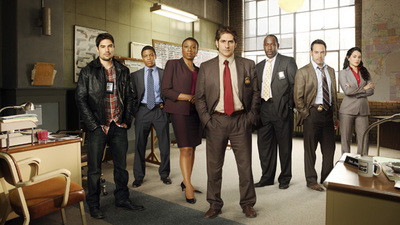 character, Finch, is white. Detroit, save its metro area, is predominately African American, and it feels wrong that the story is told from a white perspective. A story set in Detroit should be told by a person who does a better job of representing its population.
2. It is also really sad that the comedy is being done mostly by the sidekick African American character, Washington. He is inept, he is comical, he is suppose to be a minstrel character, which is so disappointing, again, considering that he is a better representation of the city's population than Finch.
3. Some of the suspects were white, which was a nice change of pace, considering so many of the bad guys on other cop/detective/procedural shows are minorities. Two of the suspects, including a drug addict, were white.
 The night's bad guy, James Burke, was white. Although many (white) people imagine that there is a lot of black-on-white crime, the case is actually the opposite. Within the episode, the bad guy committed violence against both whites and African Americans, again, different from the mainstream, white imagination. Of course, the drug dealers were African American, so for every bit of progress of racial subversion, something typical and cliche seemed to happen.
4. The episode also depicted an interracial family, one that was sadly dealing with a father in prison and a recently-murdered mother. No comment is made, by anyone, on the fact that a white woman was raising her biracial grandchildren with her African American daughter-in-law. Is this what the so-called post-racial America looks like? Imaginary Detroit?
5. The choice in homicide itself was significant. If you have ever watched Detroit News, you know that the most common murder appears to be the "Baby Momma Murder." By that, I mean husband/boyfriend kills his wife/girlfriend, who is almost always the mother of his children.
 It is so common that these murders are barely given more than thirty seconds on the news. Often, these murders involve only African Americans, but here it involved a biracial family, one where the white man was killed his African American wife and tried to kill his biracial kids and white mother. This was both confirming to certain ideas about murder in Detroit but also subverted it. It adheres to an all-too-common and tragic story, but it also changed the stereotype, by showing white men just as capable of that sort of violence that is so linked to African American men. It implicitly questioned the idea that this violence is inherently linked to African American men, who are so frequently stereotyped as dangerous savages.
Some other non-race-centric notes about the pilot episode:
1. I also loved how the medical examiner does roller derby in her spare time. Finally, a cop show where the characters at least make attempts at having a life outside the job. And points for giving her a cool, feminist-hailed hobby.
2. The phone conversations between our two main characters, Finch and Washington, were an interesting detail. Previously, the audience had been led to believe Finch is unable to express himself. Those calls show he is capable, he is just choosing not to do so.
3. And finally: Coney Islands! Any good Detroiter can tell you their favorite Coney, and usually knows what is best at a few of them. Points for adding something all too real.