Monday, July 18, 2011

The Green Lantern

Spoiler Alert!: Some of the best and juiciest bits of the movie are revealed in this review.

by Courtney Hilden

With all the superhero movies made in recent years, like Batman, Spiderman and Ironman, the competition for the high-flying, mutant-spider-bitten, and spandex wearing can be tough. And yet, The Green Lantern, a lesser-known superhero, gets a decent movie.
The story picks up with Hal Jordan, a hotshot pilot, who, since he is being played by Ryan Reynolds, puts the hot in "hotshot." At work, he flies suicidally in an effort to beat drone planes, and it is a Pyrrhic victory: he beats the planes, but in the process, loses his company a government contract, and half of the employees will be fired. His ex-girlfriend, his boss, also worries about his safety, since his own father also died while flying.
Despite all this, The Green Lantern is never as dark or brooding as Batman or the later Spiderman movies. Instead, there's something wild about this character, something recklessly stupid. He shows up to his ex's in full costume, risking her discovering his identity (which takes her all of a minute to uncover.) And although he decides to save Earth solo, he does so in a way that almost destroys his life. Hal Jordan is a go-for-broke kind of character, and there's something refreshing about someone who does not brood about his decisions before or after. He simply does.
The true knockout performance in this movie is not Ryan Reynolds, although he delivers and understands his character. Peter Sarsgaard's Hector Hammond is quite possibly the most Shakespearean villain ever on screen. He is constantly being criticized and passive aggressively pushed around by his father, he is in the thankless job of a university professor and he never got the girl, and at the first hint of power he decides to use it on murdering his own father. (The writers smartly decided to concentrate the story of Hector's poor relations with his father instead of his rejection at the hands of the one female character.) Hector becomes literally bloated with his new-found power, and turns into a Frankenstein's monster of his own and his father's making: he is pitiable and evil at the same time. Sarsgaard balances these perfectly, never laying it on too thick. And his screams of pain are heartbreakingly tortured. The singer/screamers of metal bands work years to perfect their howls, and none of those come to the ones that Sarsgaard delivers.
Lastly, Mark Strong as Sinestro gives a solid performance as well. Strong is better known for playing intense enemies in movies and television shows across the pond. Strong's best characters were ones with rage bubbling beneath their surfaces. Strong does a slight turn here; instead of rage, his Sinestro is fierce, but in a subtle, strangely nurturing way. If there is going to be a second movie (and honestly, I am not opposed to the idea), then let's hope we get to see more of Strong and Reynolds together, saving the world.

Thursday, July 14, 2011

Heavier Than Heaven: A Biography of Kurt Cobain

by Courtney Hilden
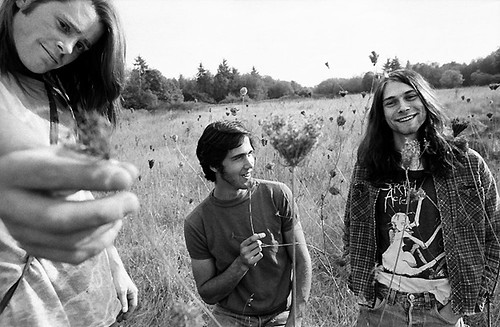
Heavier than Heaven: A Biography of Kurt Cobain by Charles R. Cross, covers the life and infamous times of the well-loved musician. The book charts the struggles within his family, his adolescent stints as both homeless and creative, his lovers (some of whom are famous in their own right), and, of course, the explosive band he served as frontman for, Nirvana.
The most difficult things about biographies is the tone. The feelings of the biographer inevitably come out, and usually this is either admiration or hatred, with little in-between. Cross manages to avoid writing a hagiography, but it is still a mostly admirable view of Cobain, and, depending on your view of Cobain, may or may not have been deserved.
Cross gives all sorts of interesting, and often surprising, details about Cobain. Cobain, famous for jumping into drum sets, destroying sets, and yes, smashing guitars, drove like "a little old lady" in the words of his bandmates, to the point where they often did not want him to drive.
Despite being fairly long, there were multiple parts of the book that begged for more details. As a teenager, Cobain became a born-again Christian while living with and befriending other born-again Christians. Given that Cobain seemed, at the least, agnostic later on in life, and famously covered Christian songs, this section of his story deserves more research, especially given that a clear reason for his falling out with Christianity never is explained.
The book focuses mostly on Cobain, but his relationships with his bandmates is only glanced at. The book does spend time discussing Chad Channing's split from the band, and how it was handled relatively maturely by Cobain and his fellow bandmate and best friend, Krist Novoselic. Minimal time is spent on Cobain's relationship with Novoselic and less on Dave Grohl, who, among other things, was Cobain's roommate.
The book also comes with a collection of black and white photos of Cobain. One of the things missing is photos of his art, which was Cobain's other great creative expression. As a fan (yes, yes, I will admit that I am really a fan of Nirvana), this could easily be a whole other book, probably in coffeebook style.
The most fascinating thing about Cobain was actually the women around him. Cobain struggled with his relationship with his mother, who Cobain seems to have seen as what we would now call a cougar, but was also put in impossibly difficult situations, with at least one unwanted pregnancy and an abusive husband. (Not Cobain's father but stepfather.) Cobain's younger sister is a lesbian, and this was almost entirely brushed over. Cobain's girlfriends, Tracy Marander, Tobi Vail, Mary Lou Lord, Courtney Love, were all interesting in their own right. The later three were all musicians themselves; Vail was a member of the seminal Bikini Kill and Love famously fronted Hole; Lord was a folk singer. Marander in particular sacrificed for Cobain, economically supporting him when Cobain was out of work. It is too bad that there are not books (or in some cases, more) about these women, who unfortunately, have become footnotes in Cobain's life and not the full people they obviously are, though this is through no fault of Cross.
For a fan, Heavier than Heaven is a must read. The less interested in Nirvana, though, the less interested most readers would be in this book.

Wednesday, July 6, 2011

AngelMonster

by Clare MacGregor
Spoiler Alert!: Some spoilers are revealed in this review

AngelMonster by Veronica Bennett tells the story of Mary Shelley, the author of the classic novel Frankenstein. AngelMonster begins when Mary is sixteen and ends when she is twenty-one. Mary’s life events are interwoven with the lives of her stepsister, Claire Clairmont, and Percy Bysshe Shelley. Throughout the course of story Mary, Percy, and Claire travel from England to France, Switzerland, and Italy. The reader is drawn into the story like a close friend of the characters. Though the novel is based on actual events and follows Mary Shelley’s life very closely, AngelMonster is not devoid of twists and turns that are sure to keep readers on the edge of their seats. During a summer visit to Lord Byron’s villa near Geneva Mary, Percy, Claire, Lord Byron, and John Polidori, take turns telling ghost stories and the beginnings of what would become Mary's Frankenstein-filled mind. Mary’s novel further develops in her imagination as her husband grows more and more dependent on laudanum, she reflects on her own mother’s death, and Claire’s life is torn apart by Lord Byron. Some of these events are conveyed in dream-like intervals sprinkled throughout the story.
Bennett provides such richly vivid historical detail that the reader feels as though they are in the same room as the characters. The story of Mary Shelley’s life is skillfully told by Bennett. AngelMonster is a must read for anyone who loves Frankenstein and wishes to learn more about the author, or any fans of Gothic novels.

Wednesday, June 29, 2011

Creepy Creatures

by Courtney Hilden
Spoiler Alert!: Some of the endings of the stories are revealed in this review.

Earlier, we here at Recommended reviewed Terror Trips, a collection of horror stories from Goosebumps told in a graphic narrative style. Creepy Creatures is the same basic format: three horror stories from R.L. Stine. Because this is Goosebumps, the stories are meant to still be appropriate for younger readers. "The Werewolf of Fever Swamp" is about a family that moves into a new neighborhood and finds there may be werewolves living in the forest. "The Scarecrow Walks at Midnight" is about two siblings whose trip to their grandparents farm is ruined by animated scarecrows. And "The Abominable Snowman of Pasadena" is about a scientist father and his children bringing home Bigfoot.
The artwork is all three stories is distracting. Both "The Werewolf of Fever Swamp" and "The Scarecrow Walks at Midnight" have art that is relatively realistic, particularly the latter. The art for "The Abominable Snowman of Pasadena" is much more cartoony, but the eyes are really distracting, with uncolored pupils.
The two superior sections, in terms of storytelling, are "The Werewolf of Fever Swamp" and "The Scarecrow Walks at Midnight." In the werewolf story, in the end, the young man and narrator turns into a werewolf, which, considering these stories are meant to be for children (just about no one ever dies), is surprising. "The Scarecrow Walks at Midnight" is actually interesting because it depicts one of the grandparents' employers, Stanley, who is depicted as having some kind of special need.
It is this character who is the most problematic. Stanley is the bad guy in the story, who has created zombie-like scarecrows based on things he read in a magic book. People with disabilities are often depicted as stupid, pathetic, evil or combinations thereof. In this story, Stanley is depicted as all of them. He is evil enough to use his scarecrows to threaten the grandparents and the siblings, but too stupid and pathetic to effectively control or destroy the scarecrows. No real motivation is given for his actions; apparently his "inabilities" do that for him. No critique of the family that employs him or society that marginalizes someone like him is given (which would have served for a more reasonable and sympathetic motivation.) Instead, he is just bad. Instead, he is just like his zombie-scarecrows; dangerous and needing to be controlled by the employers (easily read here as capitalists) and the abled.
Creepy Creatures is not as good as Terror Trips, both in terms of art and storylines. Creepy Creatures also has some problematic depictions of those with special needs, which discerning parents might want to shield their children from or at least discuss with them.

Thursday, June 16, 2011

Mary Olivier: A Life

Spoiler Alert!: Some details of the novel, like the death of a certain character, is revealed in this review.
by Courtney Hilden

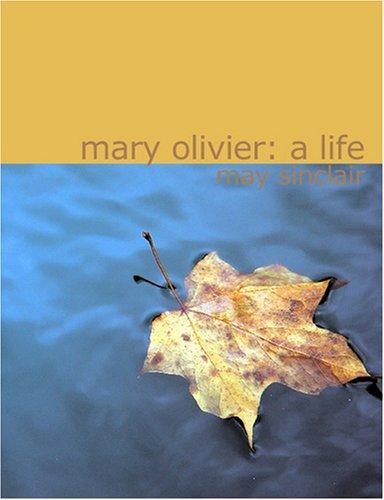
Mary Olivier: A Life by May Sinclair, is exactly that: the life story (though, interestingly, not necessarily her death) of the title character, who comes of age in Victorian England, struggling with an unsympathetic family, uncaring men, and a passion for intellectual pursuits.
The writing is marvelous. Like The Awakening, the novel begins as the main character is just swimming out of consciousness, and the reader moves through the first part of the book as if in coming out of a dream, becoming more aware of details as the story progresses. Sinclair, who coined the term "stream of consciousness," gives a lovely example of the technique that has so famously become a part of modern novels. The novel is incredibly impressive just because of the writing.
Mary Olivier is often compared to Jane Eyre. Both novels feature smart, meditative young women growing up in Victorian England. Because Jane Eyre is often considered a cult masterpiece by feminist scholars, I wanted to briefly compare the two characters, Mary and Jane, and to write about the issue of control within the novels.
Mary's and Jane's families, especially the women in those two families, attempt to control the main characters. Mary's mother is a Mommy Dearest: passive aggressive, inducing guilt trips, and manipulating her daughter, even when Mary is middle-aged. She disapproves of Mary's love of German, poetry, philosophy, and other subjects, so she takes books away from her. She hates that Mary is an atheist, so she constantly nags her about her beliefs and makes Mary read the Bible to her. She does not want her daughter to get married, so she continually sabotages any relationships Mary has with men. She isolates Mary alone in a home with her for decades, where Mary has little interaction with others, cannot do what she likes, and becomes increasingly cowed by her mother. This is the one of the things that was anti-feminist about the novel: as a young woman, Mary fights this oppression, but eventually allows herself to be controlled. It gets to the point where her mother no longer needs to throw her weight around; Mary makes choices based on her mother's "needs." Like a prisoner who has been watched for too long, she polices herself. Jane, of course, never knows her mother, though other women in her life (such as her aunts and her female cousins) attempt to control her. For the most part, Jane does not let them.
Then, there are of course, the men and how they attempt to control both characters. For Mary, there are multiple men that she considers for suitors: Maurice Jourdain, Lindley Vickers, and Richard. All of them disappoint her in the end. Jourdain likes her as a little girl and pays for her education. He finds that he does not like her with a real mind and that she is too headstrong, and, after being unable to change her, he marries someone else. Vickers courts her while simultaneously sleeping with another young woman in the village. And Richard grows impatient with her and her issues with her mother, so he too marries someone else. And Mary never marries, which to many readers might seem sad, but the novel ends happily, with her, in third person narration discussing how the little things in her life make her happy. Jane's Mr. Rochester infamously treats her with disdain, manipulating her and lying to her about his own marital status. And St. John tries to compel her to marry him and be his sidekick on his suicidal missionary trip. And Jane marries Mr. Rochester, who becomes less handicapped because of her in the epilogue of the novel.
Jane Eyre is a complicated novel when we consider the feminism question. On one hand, it is hard to see her as much of a feminist character or hero because she marries a man who shows her little respect, but one the other hand, she is otherwise fiercely independent when it comes to anyone else in her life. The novel suggests that one should not give up one's independence until the man of your dreams comes along. Mary, conversely, inevitably spurs the advances of all her suitors by being herself, and yet she becomes completely controlled by her mother in her later years. Mary is only happy after her mother conveniently dies. Both Jane and Mary claim to be happy at the end of their novels, and yet I am more convinced that Mary is and will continue to be relatively happy, since she has lost the last controller (her mother) of her life.
Mary Olivier is a fascinating novel in terms of its depiction of women's lives (other female characters make surprising choices not covered in this review). The novel is a great choice not only for Jane Eyre fans, but readers who enjoy Victorian and modernist literature, particularly those who enjoyed The Awakening, "The Yellow Wallpaper" or the works of Virginia Woolf. (The novel was published in 1919 but is set much earlier.)

Monday, June 13, 2011

The Dark-Hunter Companion

by Clare MacGregor

Sherrilyn Kenyon’s Dark-Hunters books draw readers into a world of hunters whose duty it is to protect the human race from supernatural forces that would harm them both in the waking world and in their dreams. Each group of hunters has strict rules they must live by. These rules not only dictate their interactions with humans, but interactions with each other. Because there are so many factions in the world of the Dark-Hunters, readers might easily find it difficult to keep the relationships between the various Hunter factions, the Demons and Gods clear in their head. The Dark-Hunter Companion by Sherrrilyn Kenyon is a companion book for the Dark-Hunter, Dream-Hunter, and Were-Hunter series’ is written as an instruction book for a new Dark-Hunter. In the book each subdivision of Hunters has their own chapter. The first chapter is made up of the dos and don’ts of the Dark-Hunters’ world. Included in each chapter has a “directory” for the Hunters of that subgroup. The “directory” also notes which books in the series feature certain characters. In the Were-Hunters’ chapter includes descriptions of and menus from the Were-Hunters favorite hang outs. Some of the restaurants/clubs sound so amazing readers will wish they were real places. Each chapter explains the origin of each group of Hunters. If readers are familiar with mythology (particularly Greek) the easiest characters to remember will be the Gods and Goddesses. The Dark-Hunter Companion includes deleted scenes from some of the Dark-Hunter novels and an interview with Sherrilyn Kenyon.
The Dark Hunter Companion is a wonderful book to have on hand when reading the Dark- Hunter, Dream-Hunter, and Were-Hunter series to use as quick reference.

Monday, June 6, 2011

Beyond Heaving Bosoms: The Smart Bitches' Guide to Romance Novels

by Clare MacGregor

Sarah Wendell and Candy Tan are the founders of Smart Bitches, Trashy Books website and blog have published a book that has caught the eye of romance authors and romance readers alike. Beyond Heaving Bosoms: The Smart Bitches’ Guide to Romance Novels by Sarah Wendell and Candy Tan is a wonderful laugh-inducing literary criticism of the romance genre. The authors of this book, both avid romance readers, delve into everything romance readers’ love and love to laugh at about the genre. Subjects discussed in Beyond Heaving Bosoms include “Cringe-Worthy Plot Devices”, “The Covers, and The Reasons to Snark Them”, and “Defending the Genre”. There are also in depth analysis of heroines and heroes. The book also includes “The Ten Commandments of Heroine Conduct” and “The Bitches’ Dictionary” which provides definitions of stock characters and situations that can be found in nearly every subgenre of the romance novel. Beyond Heaving Bosoms includes lots of fun and games such as “Choose Your Own Man Tatty”, the Romance genre’s answer to Choose Your Own Adventure, a color by numbers Romance cover, and “Write Your Own Romance” (a Mad-Lib game) just to name a few. While some games and activities like the Romance maze allow for only one player, others like “The Smart Bitches’ Big Mis Game”, “Create Your Own Deflowering Scene”, and “Anatomy of a Truly Excellent Romance Cover Treasure Hunt” are great for a Girls’ Night In.
Reading Beyond Heaving Bosoms is like chatting with friends. Beyond Heaving Bosoms is great light-hearted read for both avid romance readers and fans of other genres alike.